
 [Photographs three layers deep.]
© Karen McRae, 2013

[Photographs three layers deep.]
© Karen McRae, 2013

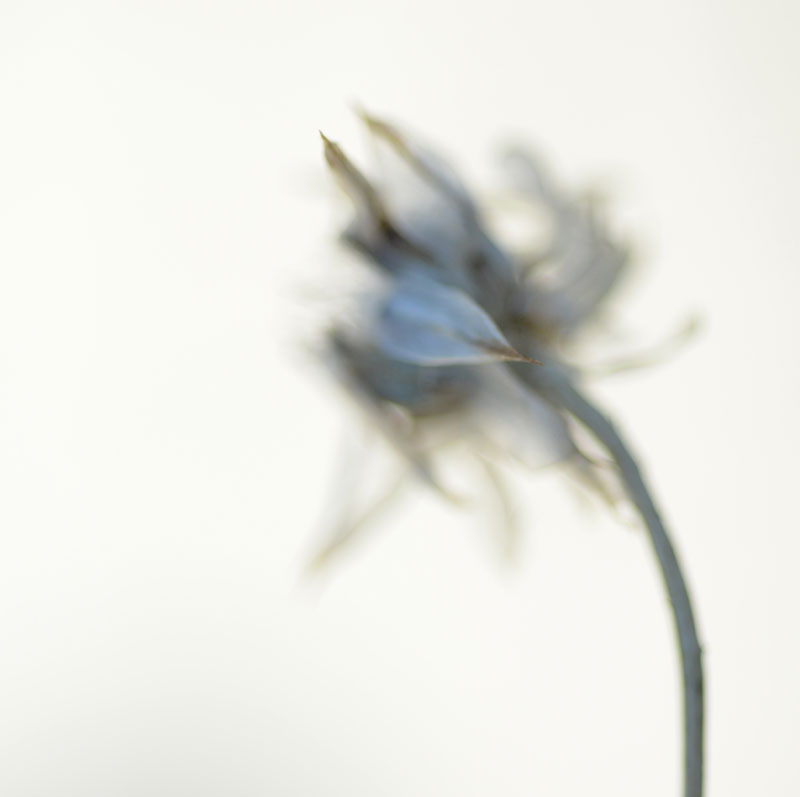

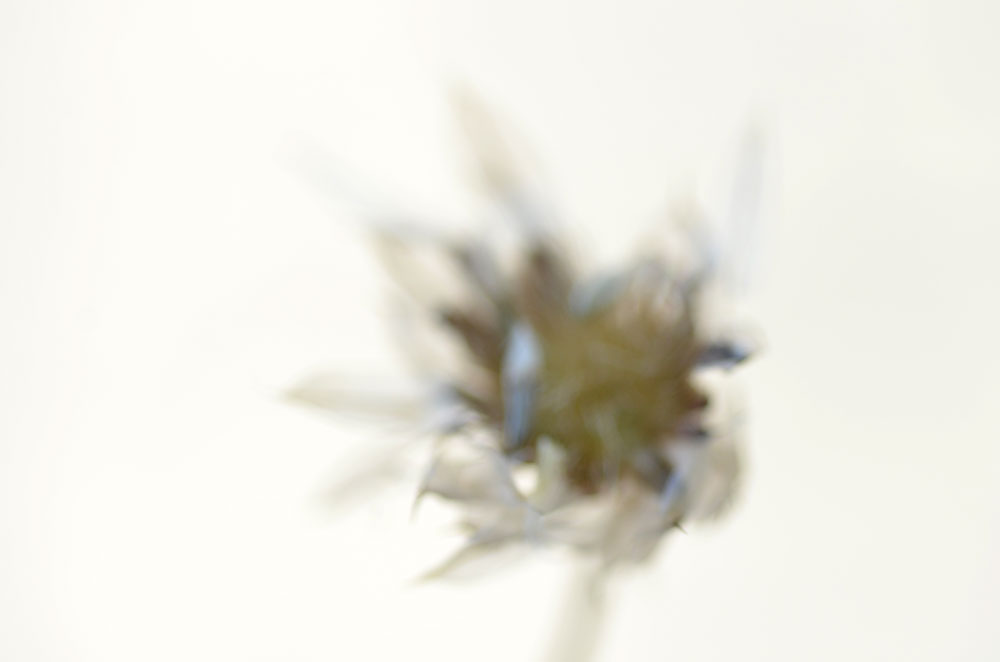
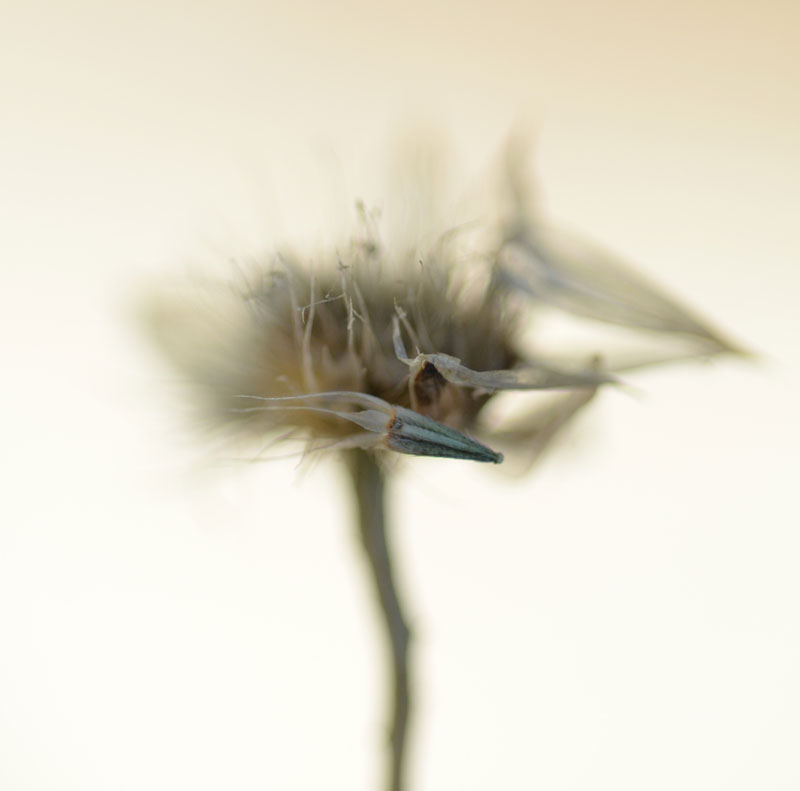 The weather is shifting already and last night we had frost. It seems far too soon(!), but anyway, the flora is shifting with the temperatures, too.
I’ve been photographing these particular type of seedheads from my garden for over a year, through all the seasons (I don’t know what they are called). I can’t seem to make interesting photographs of them when they are still blooming, though. These are just some of the small remnants of summer, each one about the size of my thumbnail. I might try again while there are still a few blossoms left but it seems to be the transforming seedheads that my camera loves.
There are always new shapes and colours developing as the seasons change so I always find them interesting to photograph. I like how the tiny ‘tentacled’ seed forms look a bit squid-like in these images.
Many previously posted images of these (and other) seedheads can be found here.
© Karen McRae, 2013


I was poking through archives, thinking about a particular painting I’m working on and looking for a visual reference. Texture, colour, form … Perhaps I over-think these things … In any case, I found a bit of spring, and a bit of autumn. If you put them together it seems you don’t get summer. But anyway, it is these earthy tones that draw me in.
I remember walking among these young trees in the early spring, the water high, and the thin trunks appearing like lanky hoofed legs wading in a river mangrove. Their reflections moving like a deep gentle breath. What sort of creatures would be attached to these spindly legs?
Of course, there is no such thing as a mangrove here, but if there was, it would be in this place where the trees are living on the edge rooted in both water and land.
Like the shifting seasons – one foot here, the other stepping towards the next. Tentatively. So far.
 As I write this there is classical music (mostly strings) playing in the background. Would my text be shaped differently if I had been listening to another sort of music? Would I have chosen different words or remembered these experiences the same way?
How does one creative process (in this case, listening) shape another?
[These images are layered photographs, made with equal parts of spring and fall]
© Karen McRae, 2013
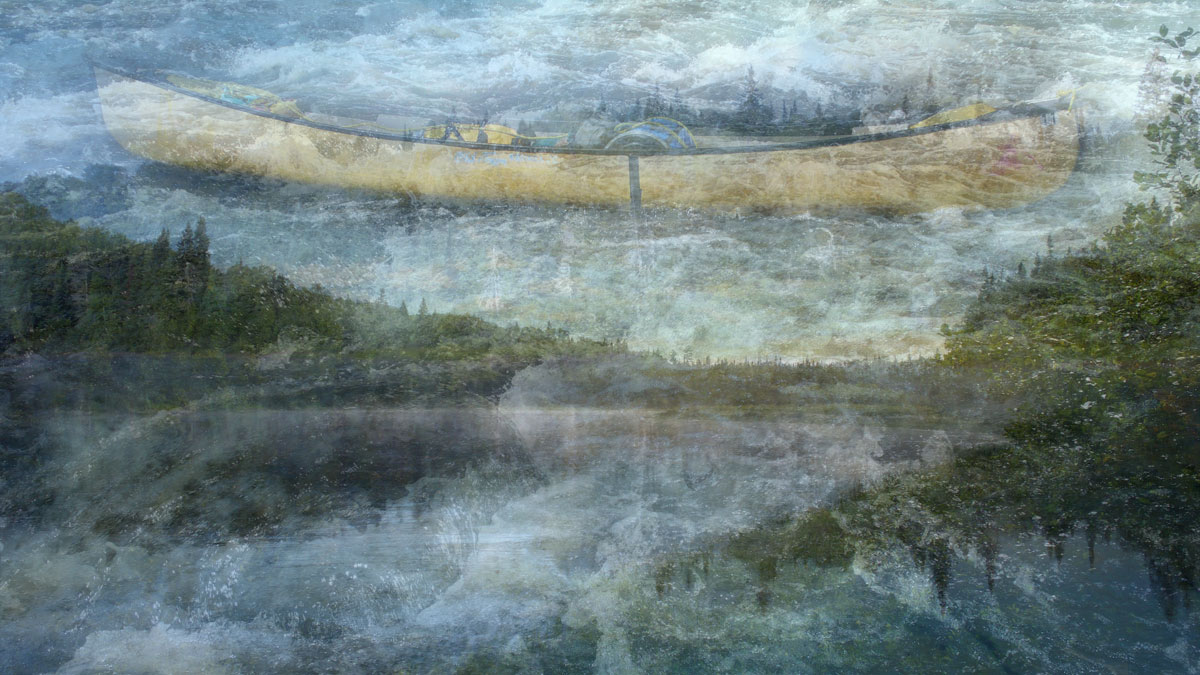 A few days and memories stacked on top of each other
I’ve been away on another canoe trip. A bit different from the last one as this adventure involved whitewater. I’d never done a paddling trip like this before on a long winding river with many, many rapids. I spent a fair amount of time grinning while we paddled 65km of that river. I confess, though, there were times I was a bit nervous. Things can go wrong in a hurry. Mostly they don’t.
The yellow canoe is not the one I traveled in (we were 5 canoes in total) but it is the most storied. It has seen many rivers and has touched many rocks. It has some wisdom the other canoes do not. It also has more scars. If you are the older and wiser vessel you will know to carry a roll of Gorilla Tape in your hull. You will know that same tape might be the thing that gets you home in the end.
This image is 4 layered photographs. Each layer expresses a different aspect of the trip; The flat water, the landscape, the whitewater, and the fearless yellow canoe. The vertical dark stripe on the canoe interrupts the image, but it belongs there. It is a bandaged scar. The other side sports a similar scar in the horizontal. The yellow canoe was on its last trek.
(These merged images were made during a 4 day camping/canoe trip on the Rivière du Lièvre in beautiful Quebec.)
© Karen McRae, 2013
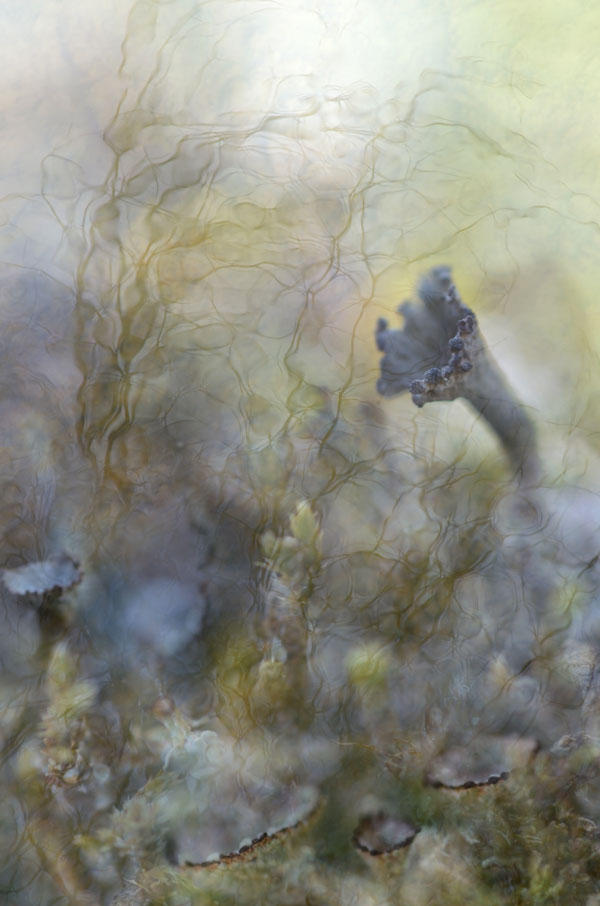 image © Karen McRae, 2013
A few days ago I received a note from a fellow nature enthusiast. Someone thanking me for connecting community through my blog, through examining nature. Someone who finds nature as inspiring as I do, but takes it in a whole other direction.
Dr. Jim Olsen is a pediatric brain cancer specialist and researcher at Fred Hutchinson Cancer Research Center in Seattle. He told me about an important project he and his team are working on and wondered if I might be willing to talk about it here.
In his email he explains,
“My family and I are nature and outdoor enthusiasts. Since I was a small child, I marveled at the innovative ways that plants and animals evolve to protect themselves and interact. Now, as a pediatric oncologist and researcher, I have turned to nature once again to generate new drug candidates for diseases that we currently consider incurable. Many plants and animals produce natural drugs that have been perfected over millions of years, and we are learning how to use these scaffolds to create candidate therapeutics for cancer, Alzheimer’s disease, and autism. I’m reaching out to you to ask for some help in spreading the word about how – without ravaging nature – we can learn from nature’s drug designs to help create new opportunities for children and adults to lead healthy lives.”
“After two decades of caring for children with cancer, I recently gave a talk at TEDxSeattle, in which I opened my heart to share how some of these individual children changed my life and drove incredible innovation through research. I am writing to see if you would be willing to share the link to this talk with your readers.”
After watching this video and doing a little research about Project Violet I was compelled to share this innovative and interesting project on my little art and photography blog although I realize it is an unusual post.
I could write quite a bit about this research but it wouldn’t be as eloquently or as accurately expressed as Jim’s words. Here are a couple of things about the research that intrigued me, though:
If you have a few minutes please watch Jim’s TEDxSeattle talk. You can support this research just by watching the video at the link below **:
How Nature and a 9-Year Old Are Revolutionizing Cancer Treatment
** The Washington Research Foundation has generously offered to donate $10 to support their work for each time the talk is viewed, up to $50,000. The goal is to have 20,000 people view the TEDx talk this month!
◊
To find out more about Project Violet (and who Violet is) please visit the website.
* Link to Dr. Jim Olson, Fred Hutchinson Cancer Research Center
Here is a recent interview with Jim on GeekWire
That’s what summer is for, isn’t it?
I am refusing to notice (for now) that some of the trees are already changing colour.


 [Pixie cup lichen and layers of summer]
© Karen McRae, 2013
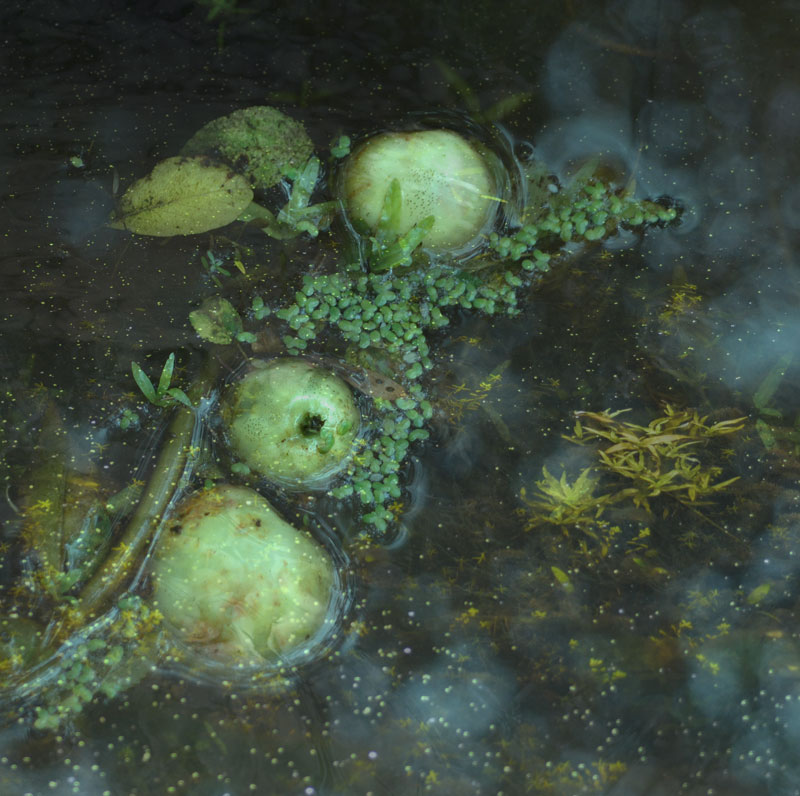

 Wild apples, crisp and tart, floating gently in the dappled creek under a canopy of trees.
[Layered with surface reflections in post processing]
© Karen McRae, 2013
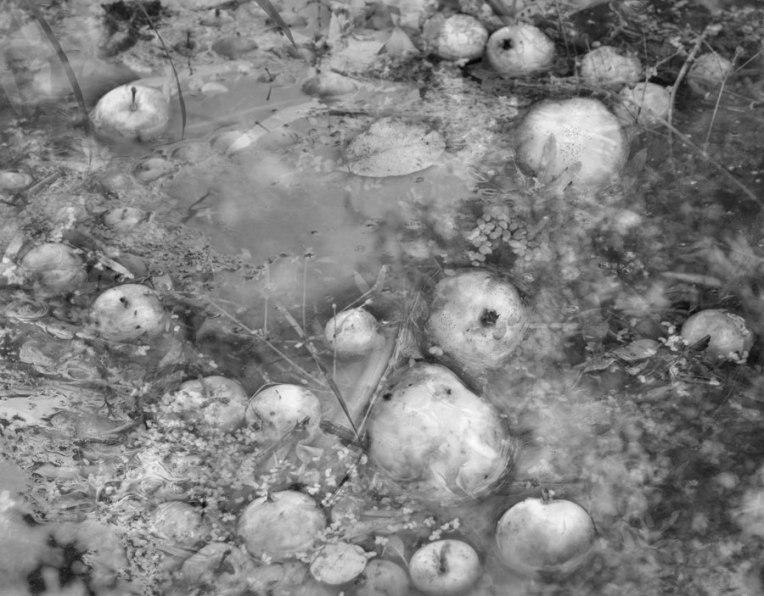
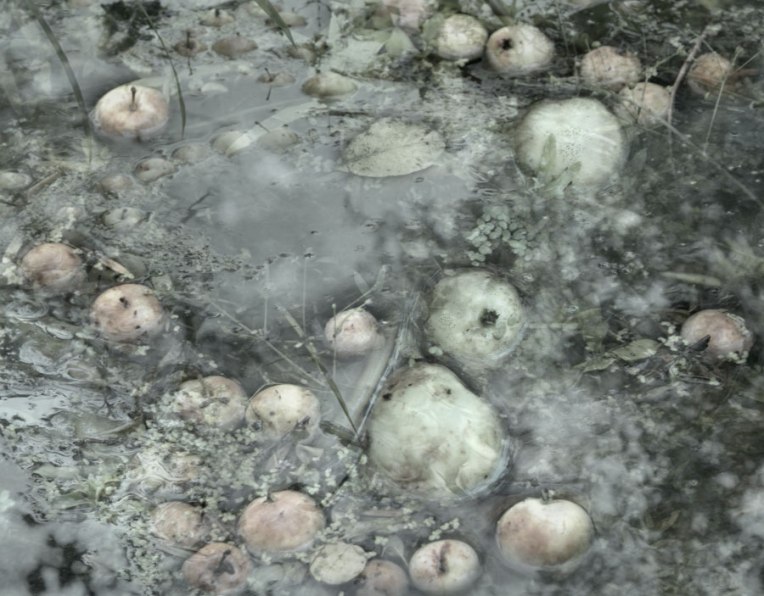

Wild apples floating in the creek, doubly exposed and ‘cooked’ three ways. (I think I like the black and white…) It seems the deer come to this hidden place to bob for apples, leaving behind deep footprints in the clay banks.
© Karen McRae, 2013
 Untitled. Oil, conté & graphite on Mylar 20″x24″. (These paintings always look so much better in real life, I think.)
A winged thing that is tied to water. Inspired from bits and pieces from the river shoreline, things now lying around the studio.
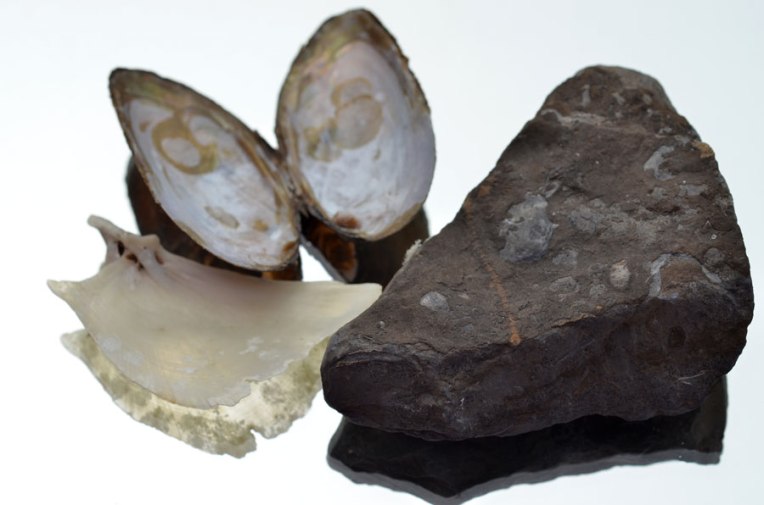
A studio view with most of the mess unseen.
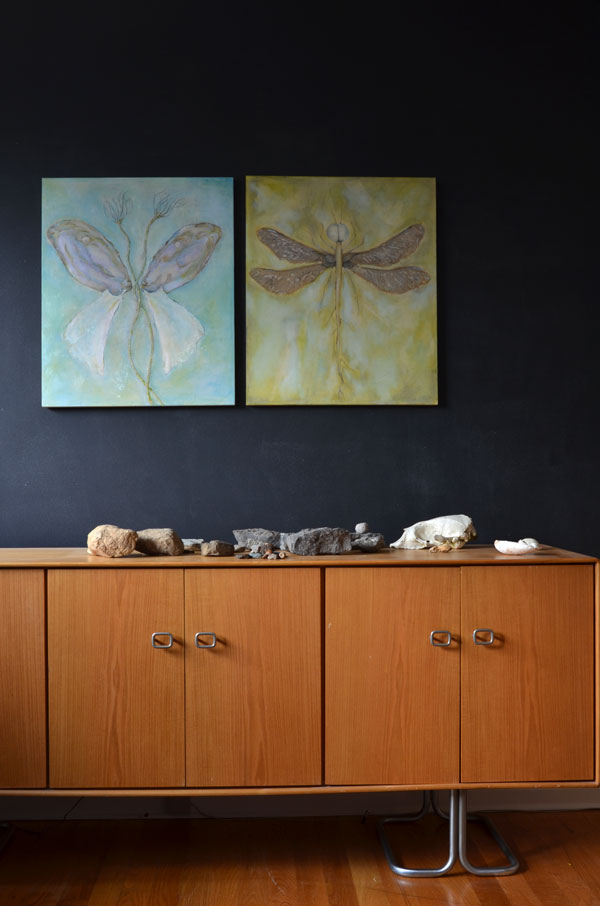 (The other painting was posted previously here.)
© Karen McRae, 2013
 draw and shoot