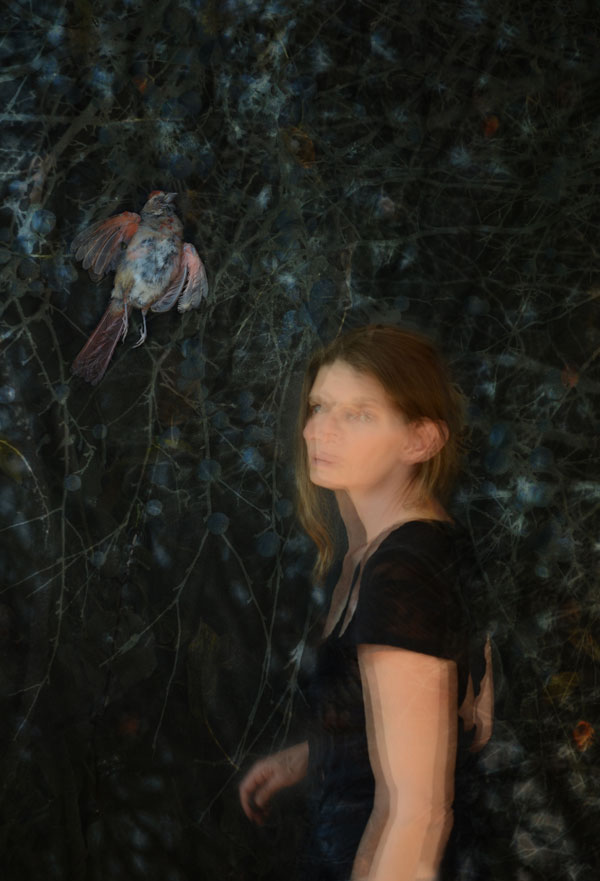
[A multi-layered double exposure]
© Karen McRae, 2014

[A multi-layered double exposure]
© Karen McRae, 2014
 The little foot paths in our minds, firm and grooved from gentle barefoot pacing.
[An in-camera triple exposure layered with another photograph]
© Karen McRae, 2014

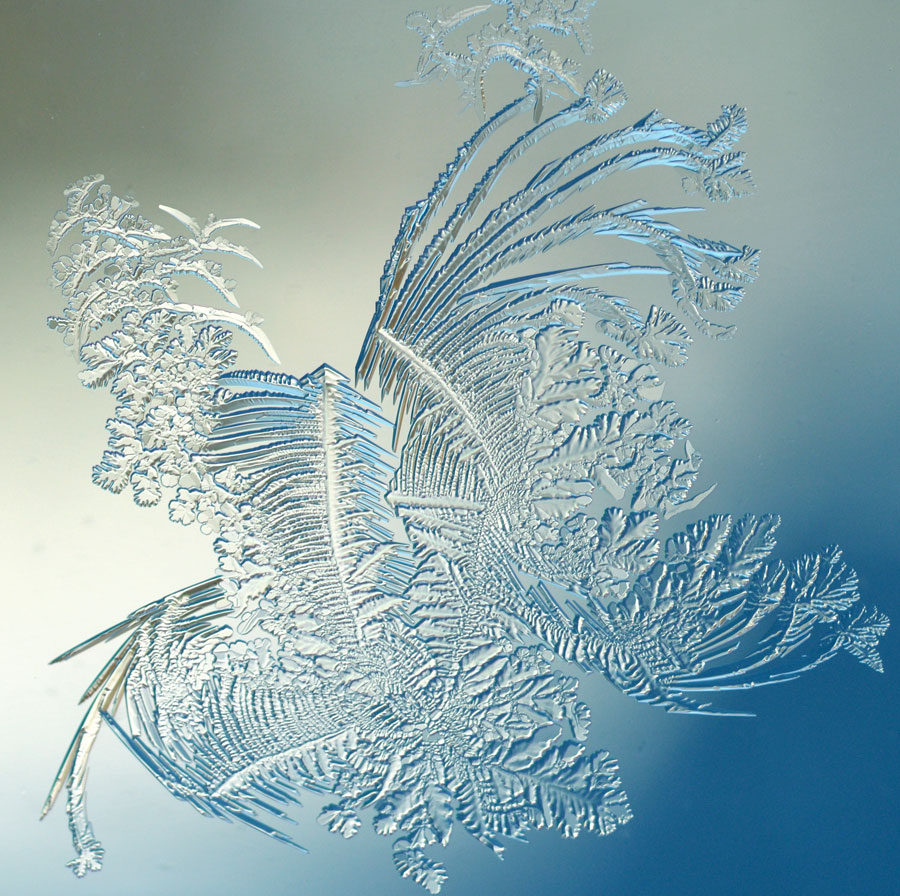


© Karen McRae, 2014
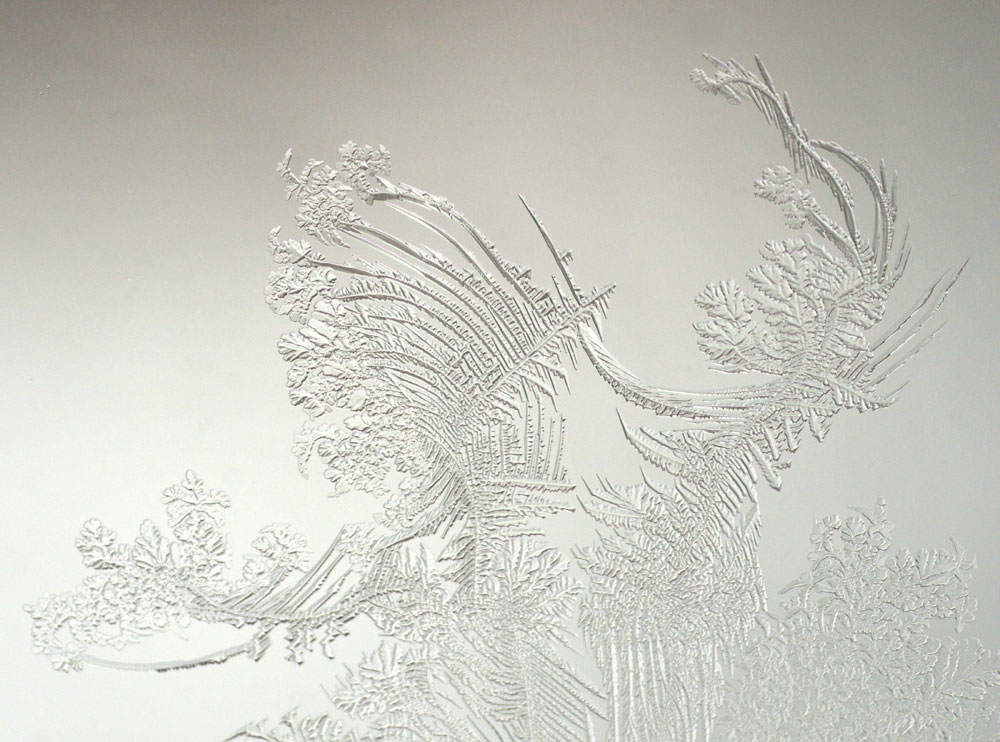

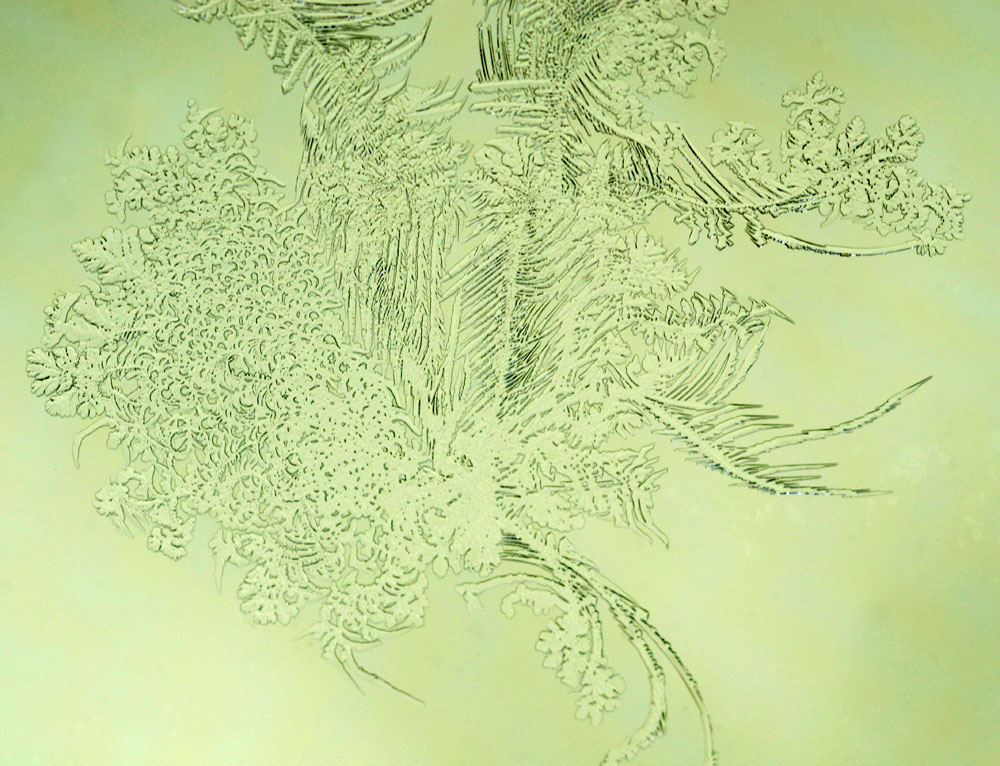
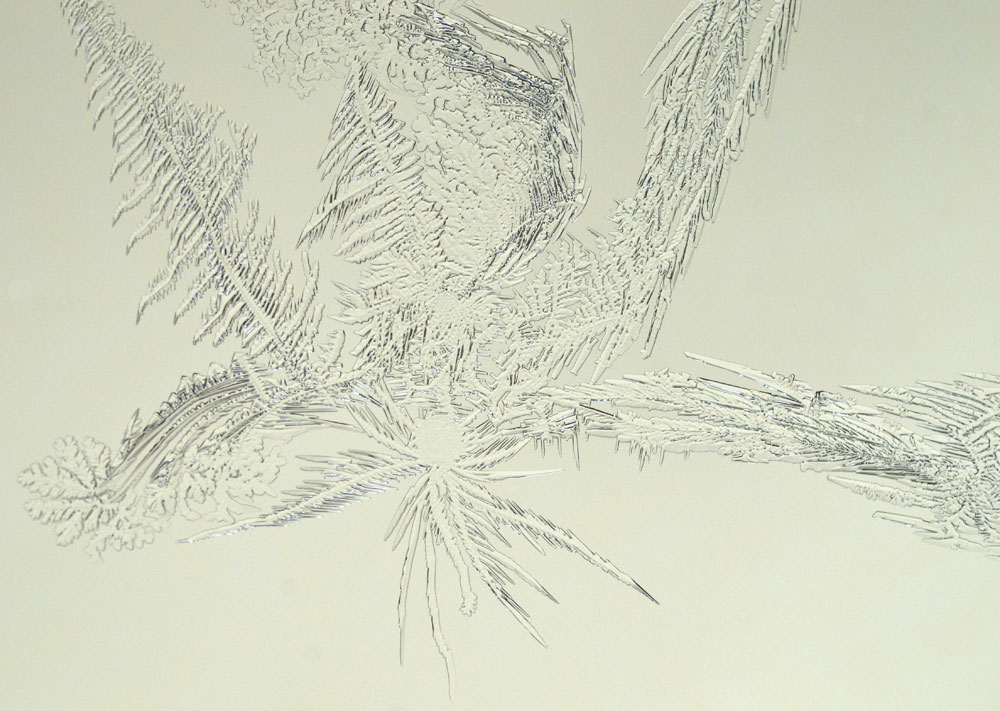
 This is what happens when an ice breathing dragon is trapped between 2 pieces of glass; your windows frost up and the temperature plummets.
 Technically, this window has failed; there should not be moisture, frost, or dragons(!) trapped between the sealed panes, but I like to think of it as a literal ‘silver’ lining. Technical failure can lead to interesting things…
Happy New Year!
[These window frost photographs were made today – I have posted similar frost a few times last winter but it is always reinventing itself]
© Karen McRae, 2013
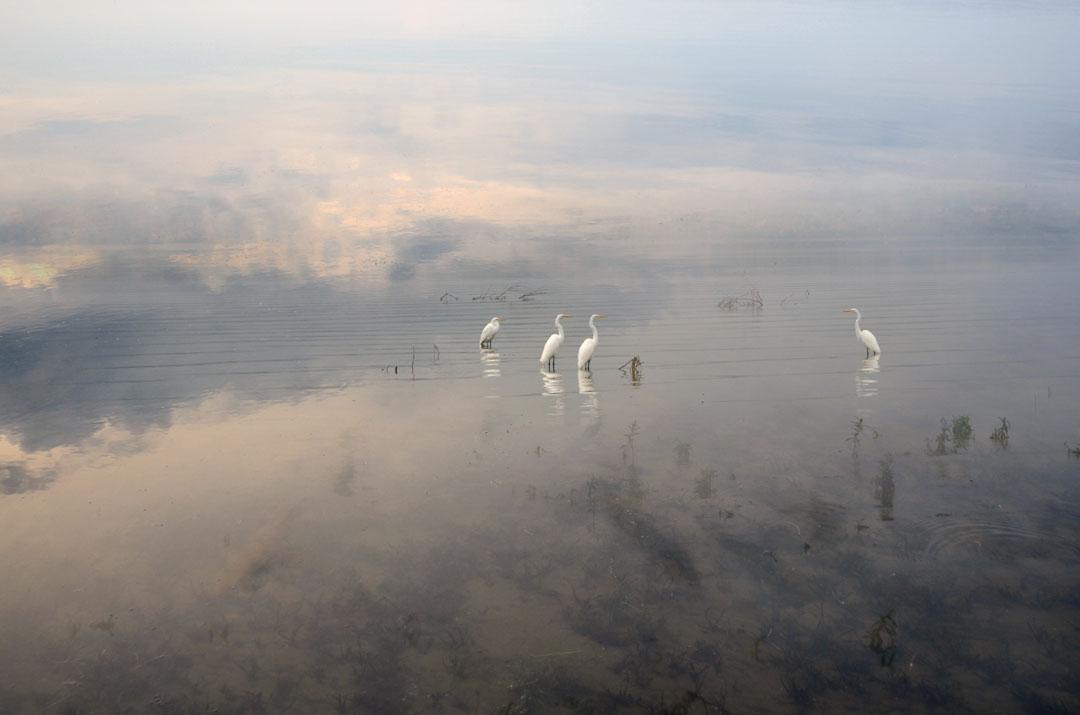 I made several photographs of these Great Egrets quite a while ago but I never felt like the images really expressed the extraordinary experience of being with these graceful creatures. I say ‘being with’ because I was standing in the water not too far from them – there was no long lens in my camera bag that day so I was pushing my luck.
Anyway, I have played with this image a little, adding a layer of … recollection, I guess. This what it feels like to wade with the egrets.
© Karen McRae, 2013
( So, I’m having trouble coming up with titles … )


This is the third entry (perhaps the last, for now) in a series of sea jelly photographs I’m exploring in black and white. I started looking at their forms for some drawings and found them interesting presented in monochrome.
All of the sea jellies pictured here are Ctenophores (comb jellies). Ctenophores are classified differently from ‘true’ jellies because of their combs – rows of hair-like cilia that are used for swimming and also catching/consuming food (The actual cilia are not really observable in these photographs).
The images above are studies of just one comb jelly – perhaps Mnemiopsis leidyias or Bolinopsis infundibulum (they are difficult to tell apart). When this jelly was not moving it became rather formless-looking and alien-like, especially under these particular lighting circumstances. With different lighting (and in colour!) you may be able to see that this jelly is bio-luminescent.
_____
The second gallery of images (with the exception of the last two) are a series of Pleurobrachia (Sea Gooseberries). You can see how they may have picked up the nickname of sea gooseberries.
The two tiny comb jellies at the end are Beroe Ctenophores. The beroe ctenophores have no tentacles and capture food through opening and closing their mouths.


[These photographs of Atlantic sea jellies were made in Cape Breton in the spring of 2012]
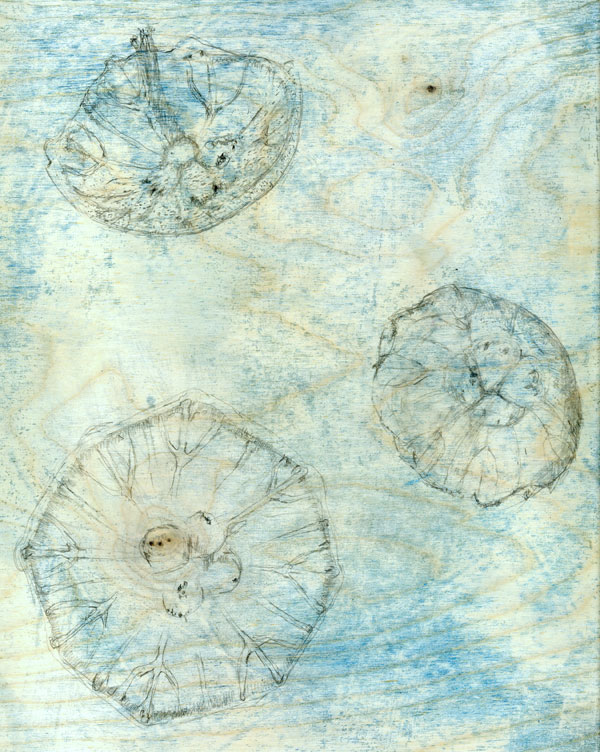 To add a bit of colour – quick sketches of moon jellies on board (an ‘under-drawing’ before a layer of Mylar is applied).
© Karen McRae, 2013

 [Photographs three layers deep.]
© Karen McRae, 2013

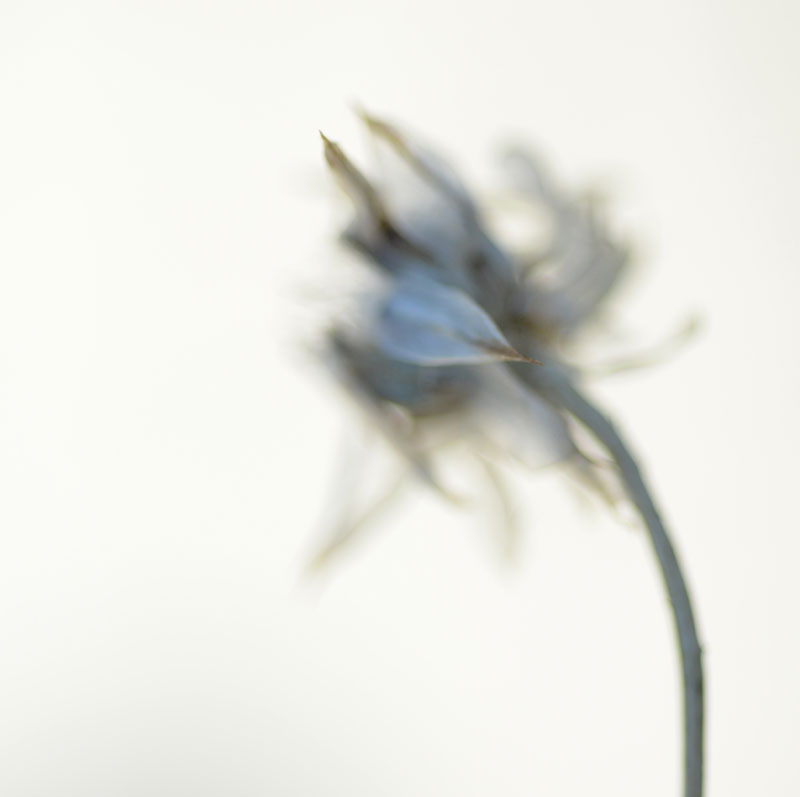

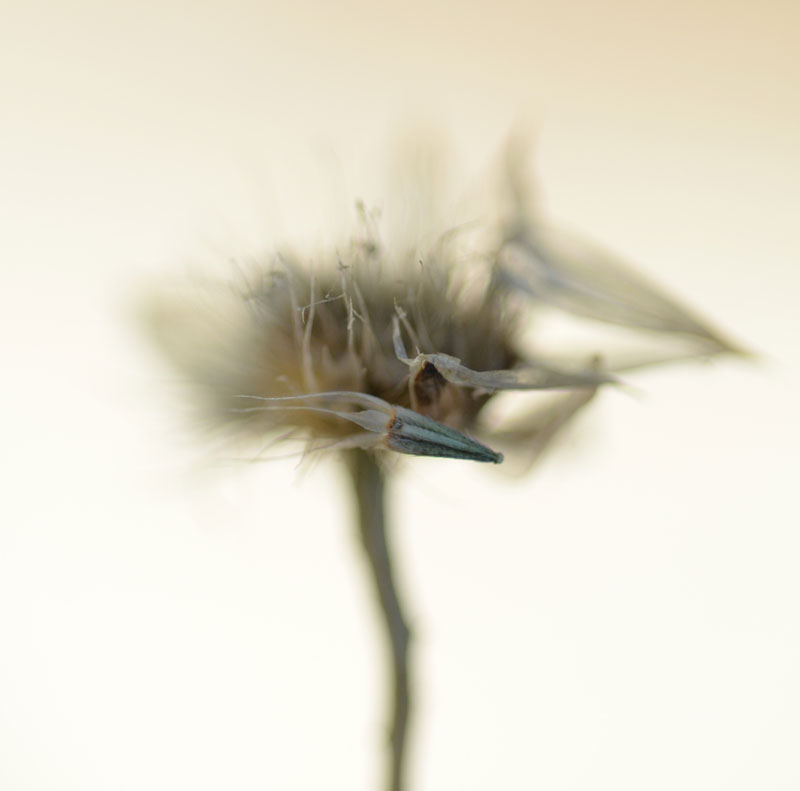 The weather is shifting already and last night we had frost. It seems far too soon(!), but anyway, the flora is shifting with the temperatures, too.
I’ve been photographing these particular type of seedheads from my garden for over a year, through all the seasons (I don’t know what they are called). I can’t seem to make interesting photographs of them when they are still blooming, though. These are just some of the small remnants of summer, each one about the size of my thumbnail. I might try again while there are still a few blossoms left but it seems to be the transforming seedheads that my camera loves.
There are always new shapes and colours developing as the seasons change so I always find them interesting to photograph. I like how the tiny ‘tentacled’ seed forms look a bit squid-like in these images.
Many previously posted images of these (and other) seedheads can be found here.
© Karen McRae, 2013


I was poking through archives, thinking about a particular painting I’m working on and looking for a visual reference. Texture, colour, form … Perhaps I over-think these things … In any case, I found a bit of spring, and a bit of autumn. If you put them together it seems you don’t get summer. But anyway, it is these earthy tones that draw me in.
I remember walking among these young trees in the early spring, the water high, and the thin trunks appearing like lanky hoofed legs wading in a river mangrove. Their reflections moving like a deep gentle breath. What sort of creatures would be attached to these spindly legs?
Of course, there is no such thing as a mangrove here, but if there was, it would be in this place where the trees are living on the edge rooted in both water and land.
Like the shifting seasons – one foot here, the other stepping towards the next. Tentatively. So far.
 As I write this there is classical music (mostly strings) playing in the background. Would my text be shaped differently if I had been listening to another sort of music? Would I have chosen different words or remembered these experiences the same way?
How does one creative process (in this case, listening) shape another?
[These images are layered photographs, made with equal parts of spring and fall]
© Karen McRae, 2013
 draw and shoot