
Reflections and compositions in a partially frozen pond. The last couple of days have been mild so there is a watery surface on the ice.


© Karen McRae, 2012
Landscape
Stepping Back
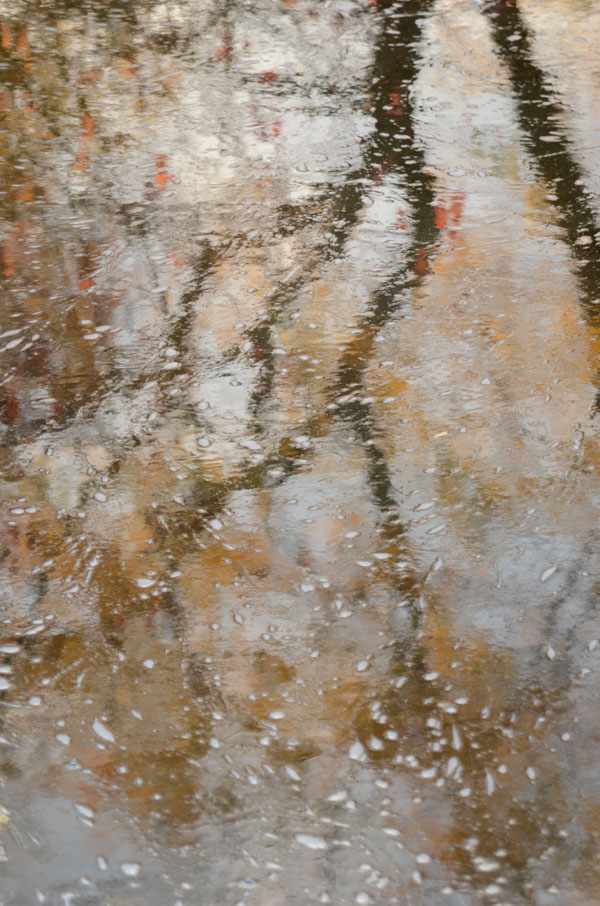
In a technical sense this first image is a poor photograph – it’s blurry and improperly exposed – but there is something about the way it expresses the season that I like. Partly it’s the colour of the leaves and the movement of the water but it’s more likely that I am recalling the moment when I was actually there and responding to the environment. We each bring our own rich history with us when look at things.
 It’s been a long while since I’ve posted images of the landscape from a broader view. These are views of the winding creek, which I have photographed the slow-moving surface of, so many times.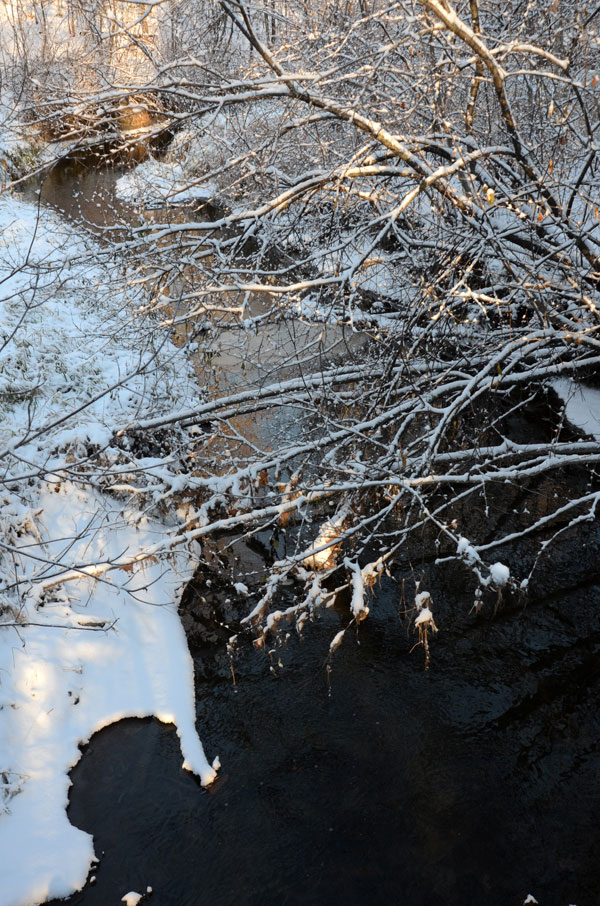
Incidental Exposures


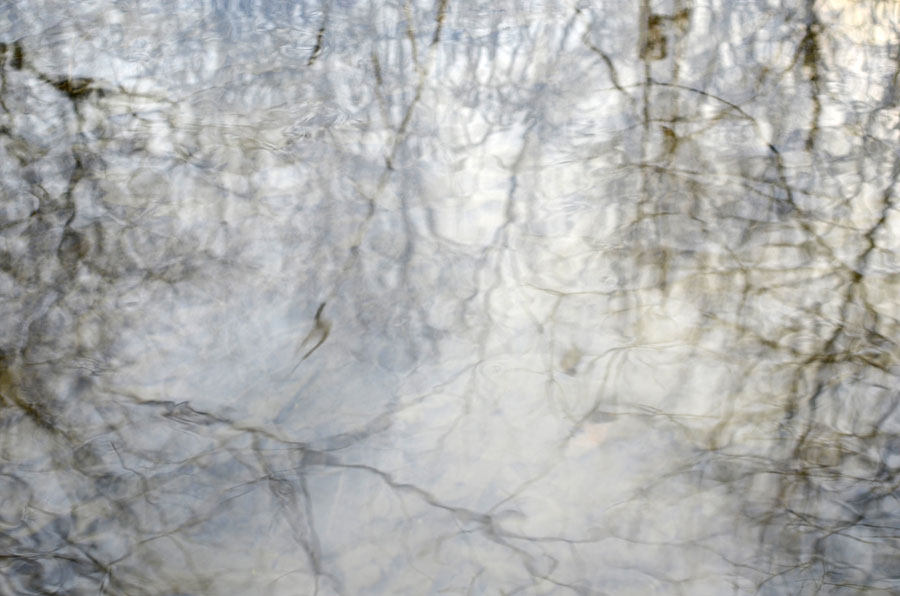 The days seem intermediary. Frosted only at the edges. The autumn colours have faded – to sepia – to grey – to misty blues.
But for some reason these are colours I can sink into. Literally.
There have been a few times when I thought my boots might be lodged permanently in the clay bottom of the creek. But so far I’ve managed each time to wrestle myself out on to solid ground. When your mind is absorbed in one thing, you may not notice that your feet are being absorbed by another…
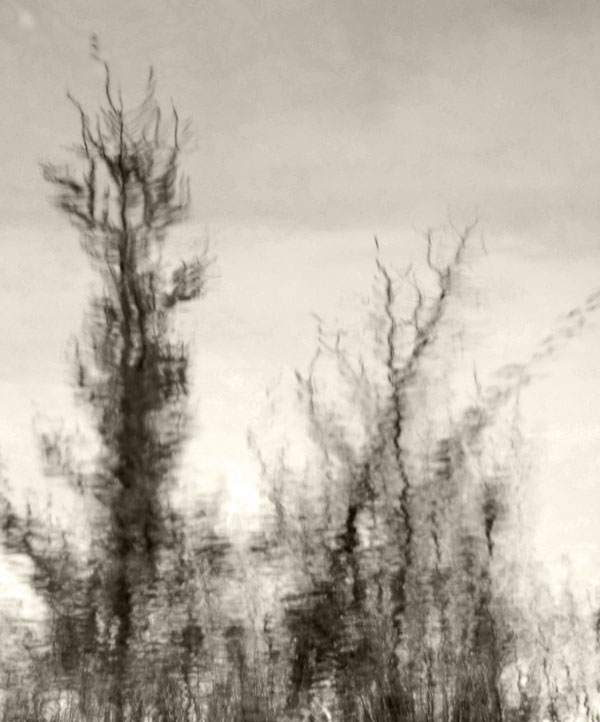
Each of these images is an in-camera double exposure. Layers of light and shadow on a rippling surface.


© Karen McRae, 2012
Autumnal Tones


◊

© Karen McRae, 2012
Lily Pad Land
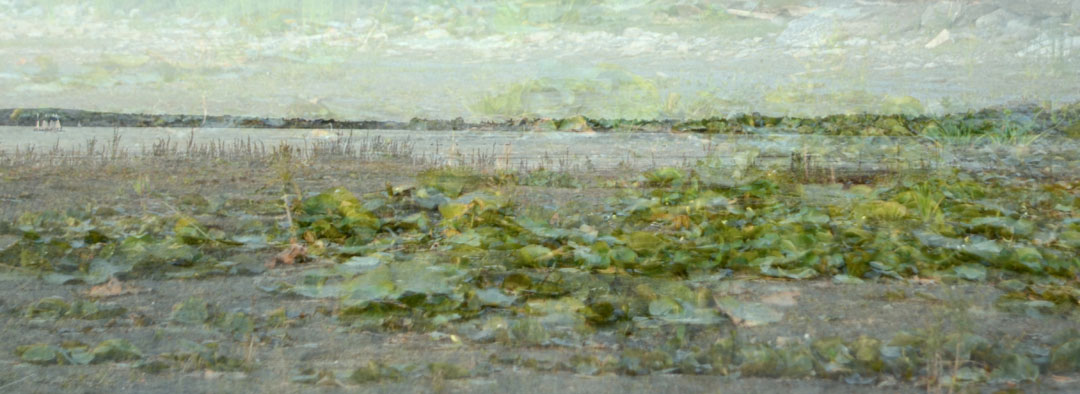 This is an in-camera double exposure (digital) I had made this past summer in the middle of drought. The water was so low the lily pads were wilting on dry land. I just came across this image when I was looking for a reference for something I am painting and I was struck by the environmental extremes that we all seem to be experiencing.
(Click on the image for a larger view)
© Karen McRae, 2012
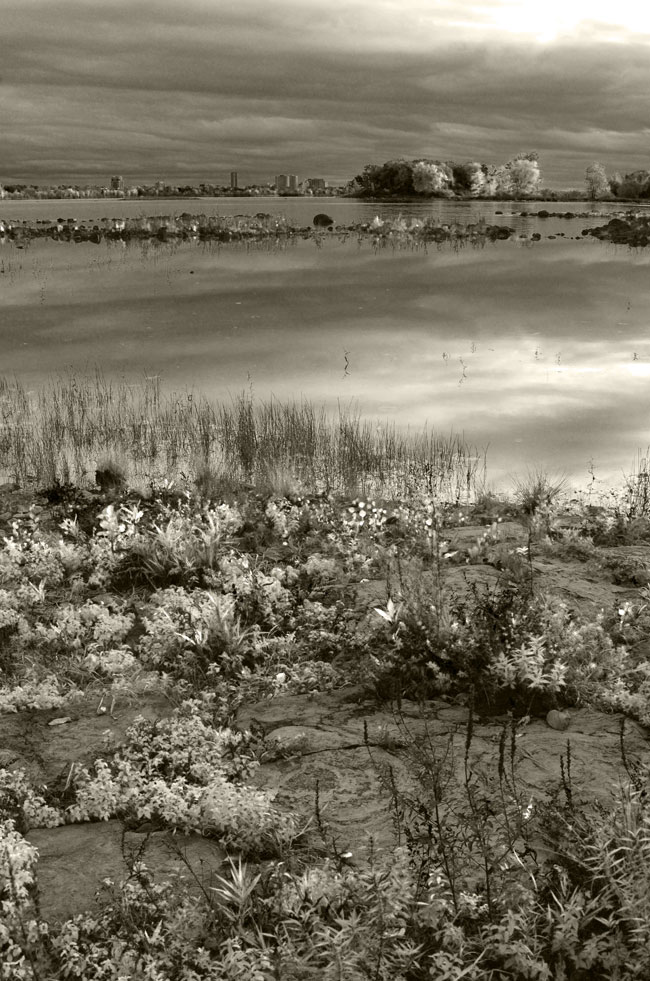
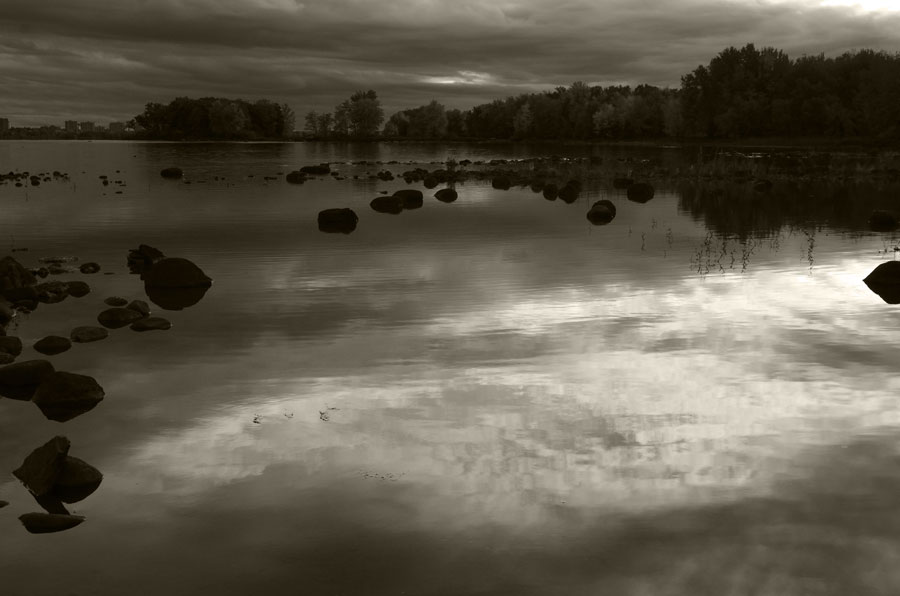
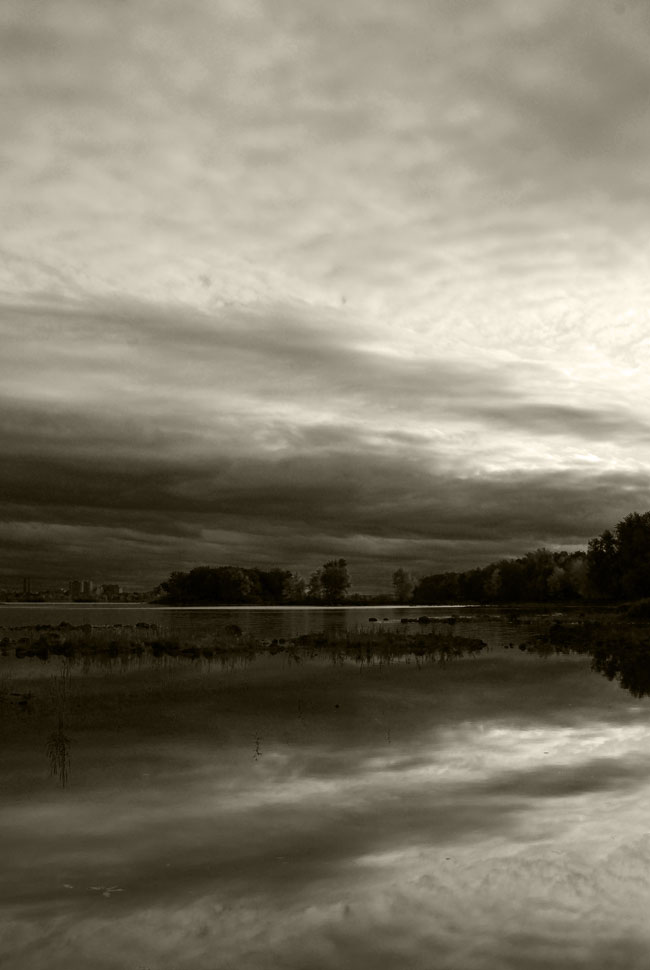
Molten
~ The liquid between 2 cities. ~


© Karen McRae, 2012
The Silence In Between
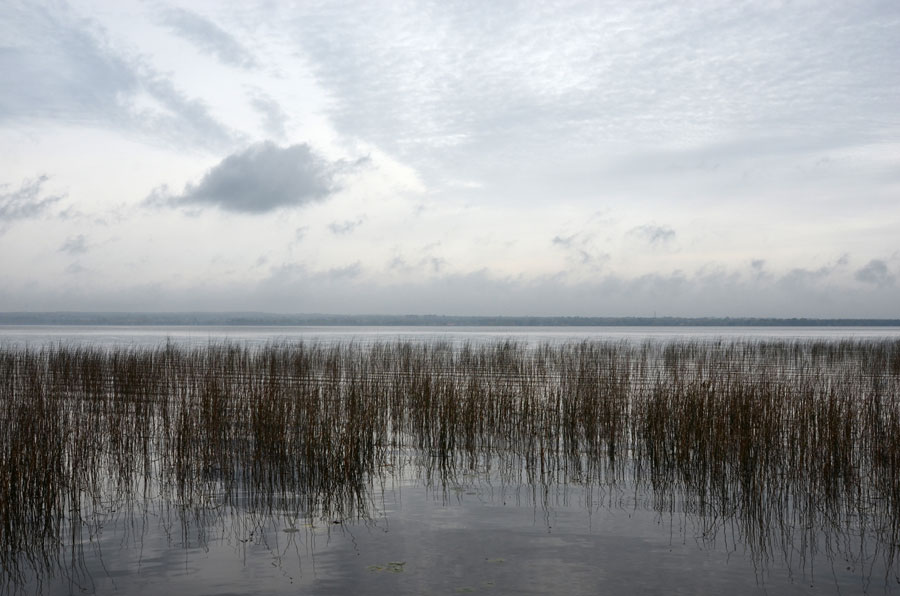 It looks so quiet here at this wide natural part of the river.
But the silence here has interruptions.
There is often intermittent popping of gunfire from the nearby rifle range and this makes the silent pauses in between more distinct, more remarkably still.
It’s as though the landscape holds its breath.
It seems if you spend enough time here, those sounds somehow become part of the wide space. The haphazard rhythm its own sort of meditation.
How can this be?
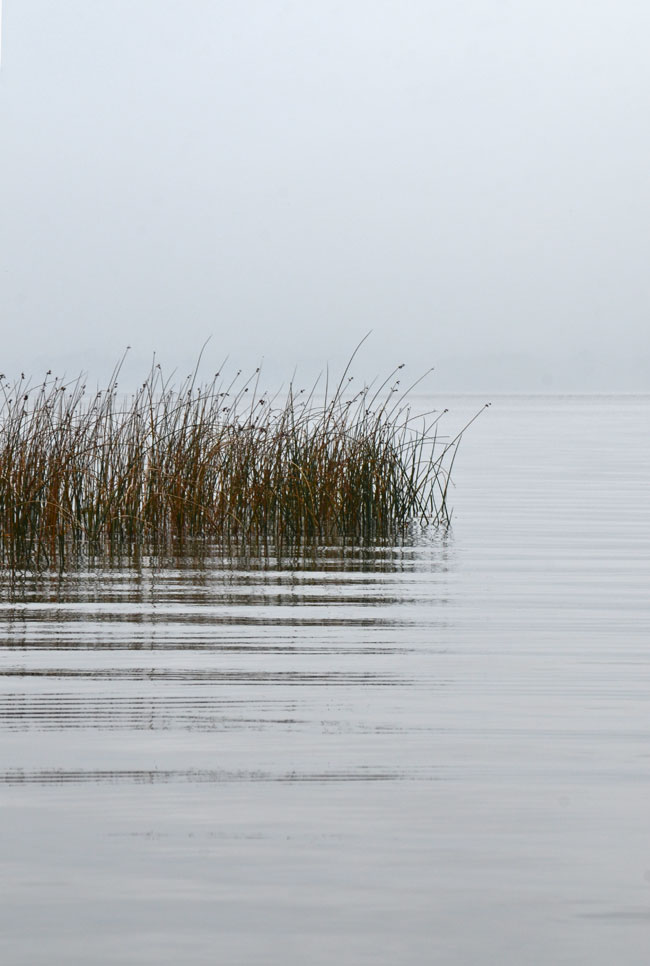
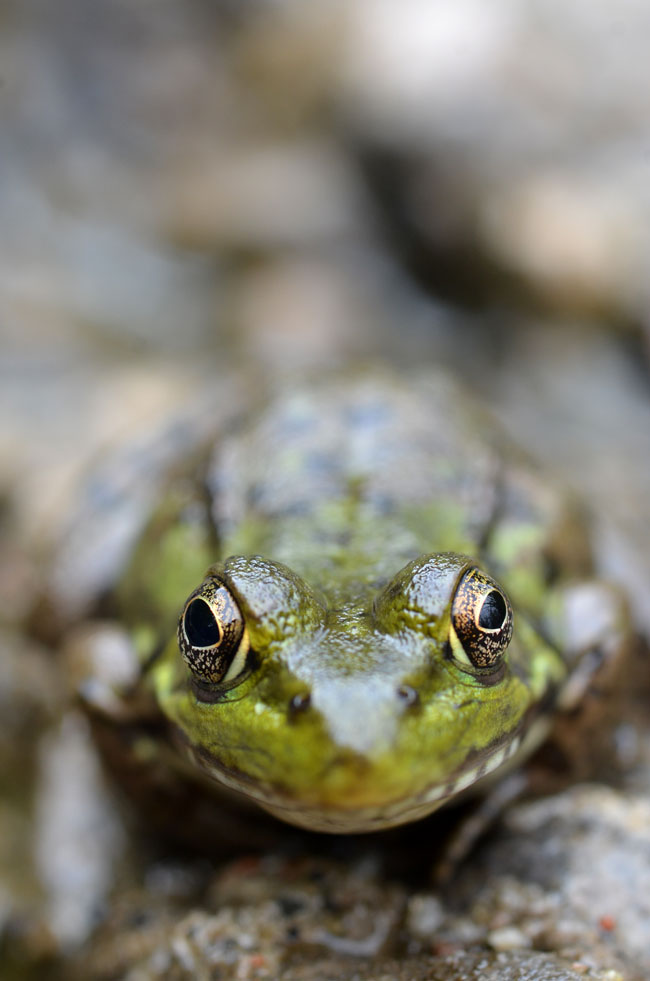
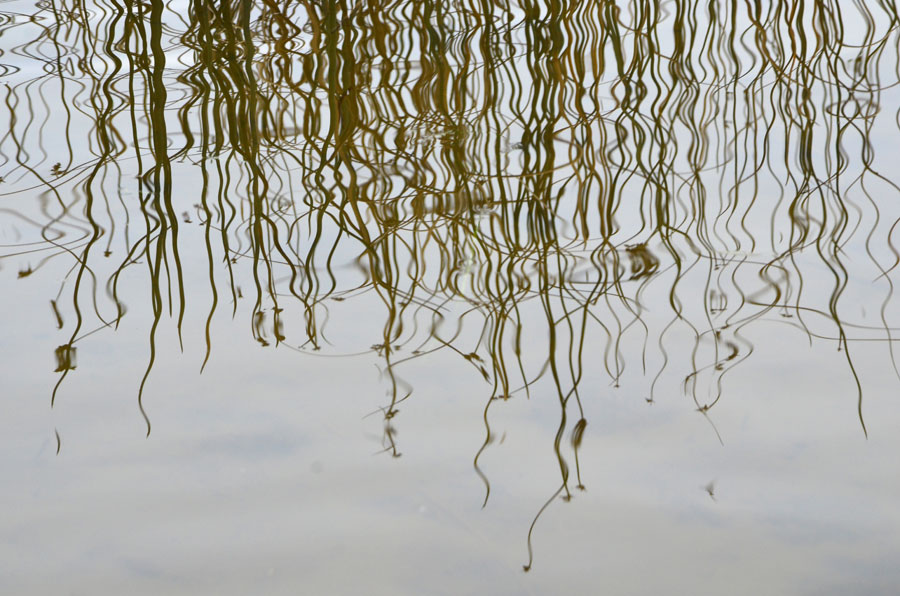
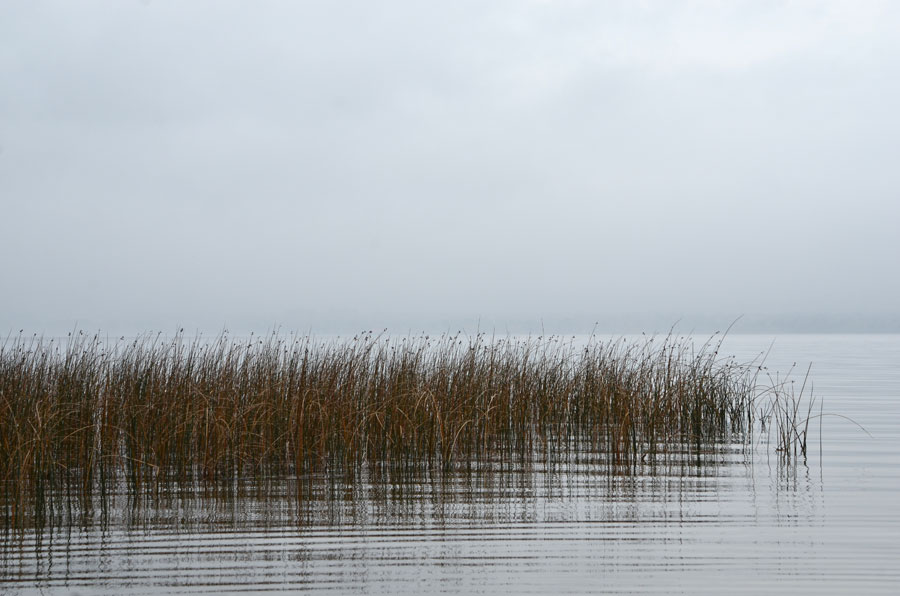


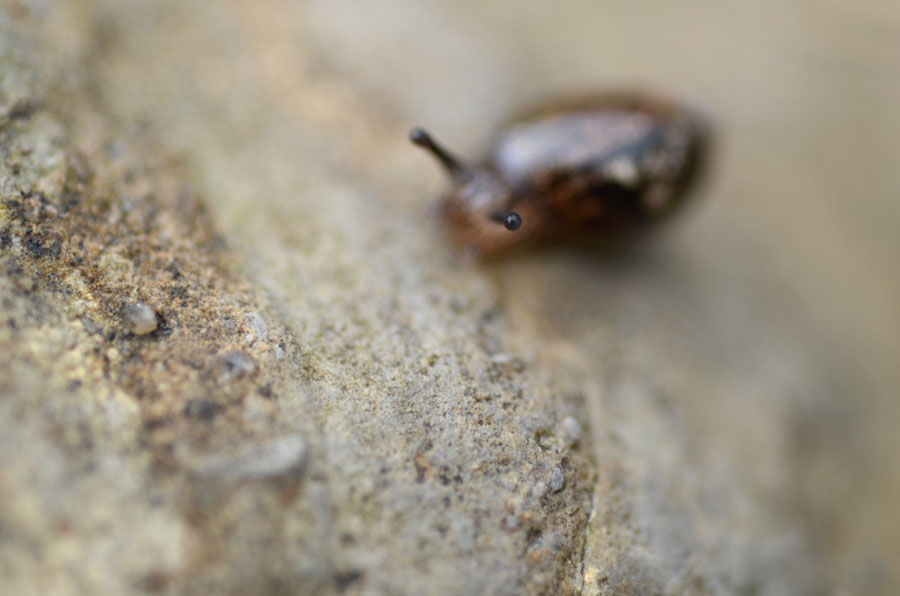 Shirley’s Bay, Ottawa River
All images © Karen McRae, 2012
Sand Dances
 I‘m not sure how long I was here looking at the delicate trails (snails or other invertebrates?) in the sand around my feet before I realized someone had come to join me…
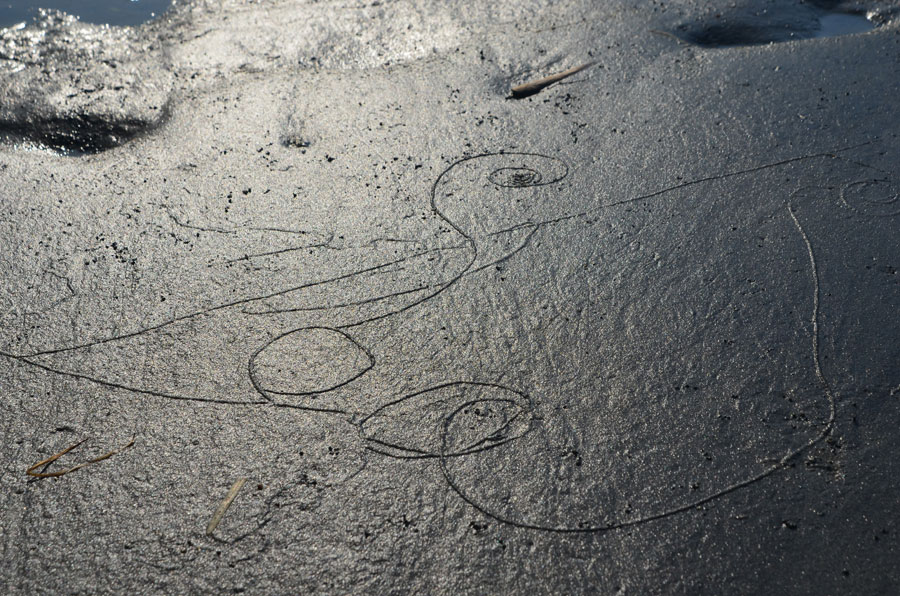
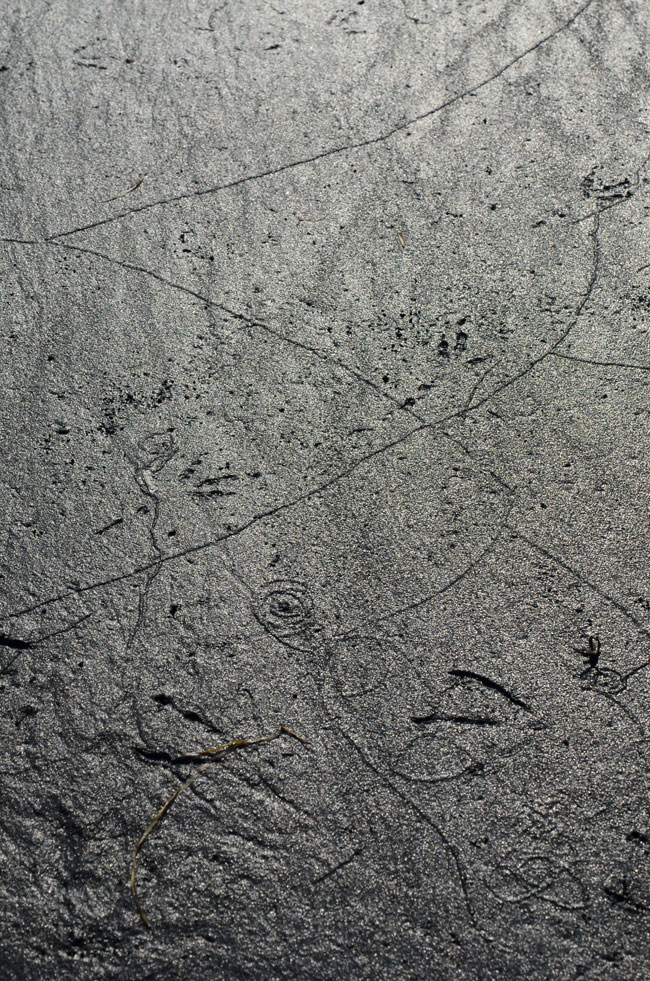
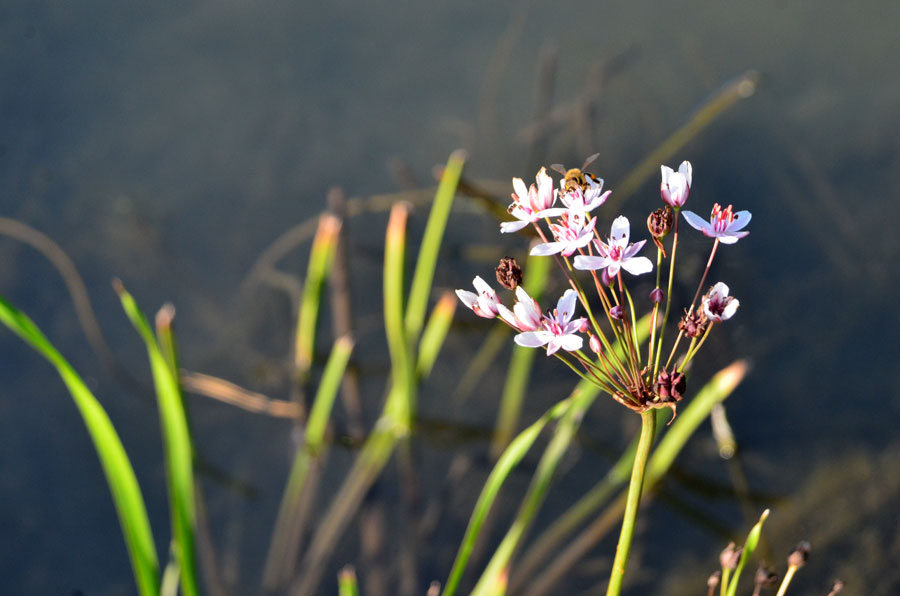
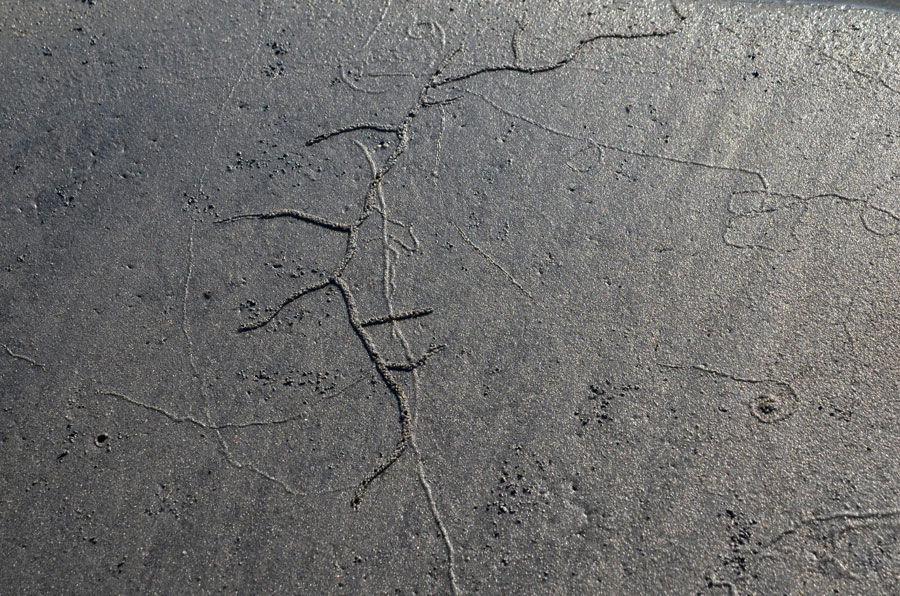
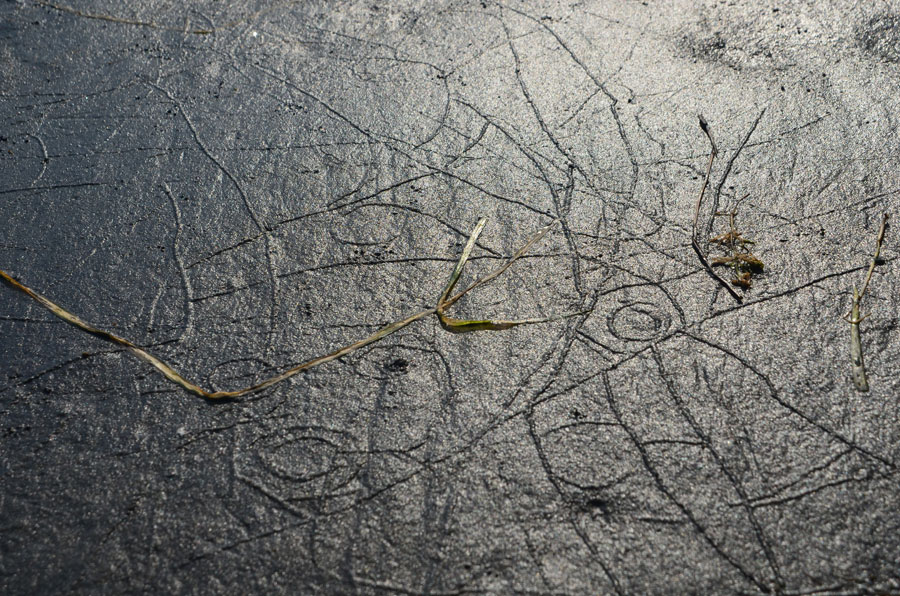
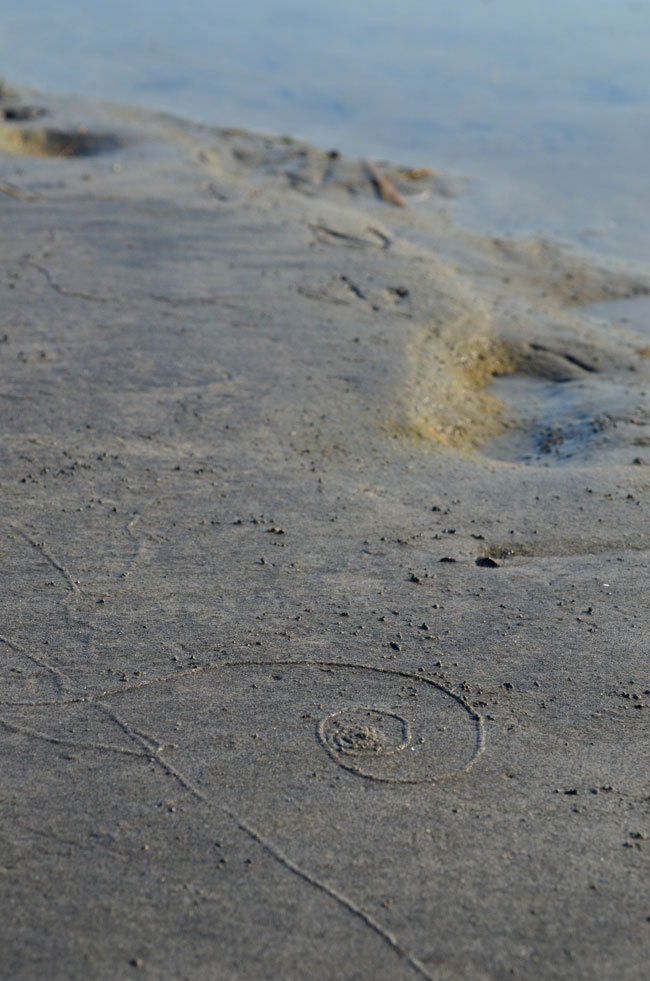 From one the last few days of September.
All images © Karen McRae, 2012
Mapping the Shoreline 2: Stromatolites
The river holds a lot of history.
Some of it has flowed downstream with the currents and moved on to the sea but some of its oldest history is still here. And when the water is low you can find one of the most striking features visible along the Ottawa River shoreline: The stromatolites on the Quebec side of the river. They have been scraped down by glaciers and eroded by time but the ancient stromatolite bed remnants are still remarkably beautiful and visible.
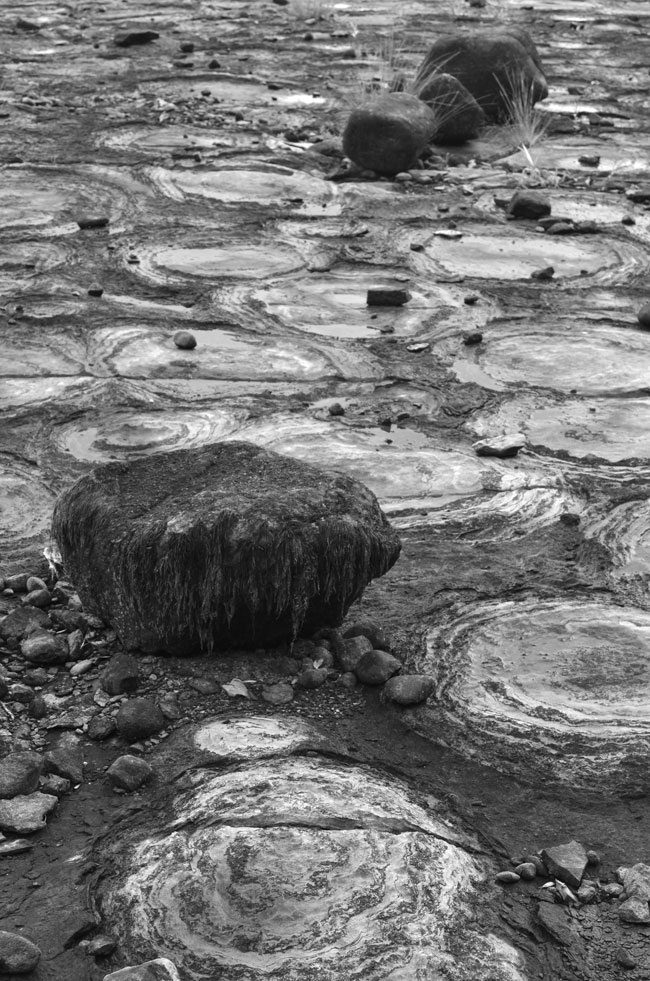 The seaweed growth on the rock above shows that the stromatolite formations are often covered by water.
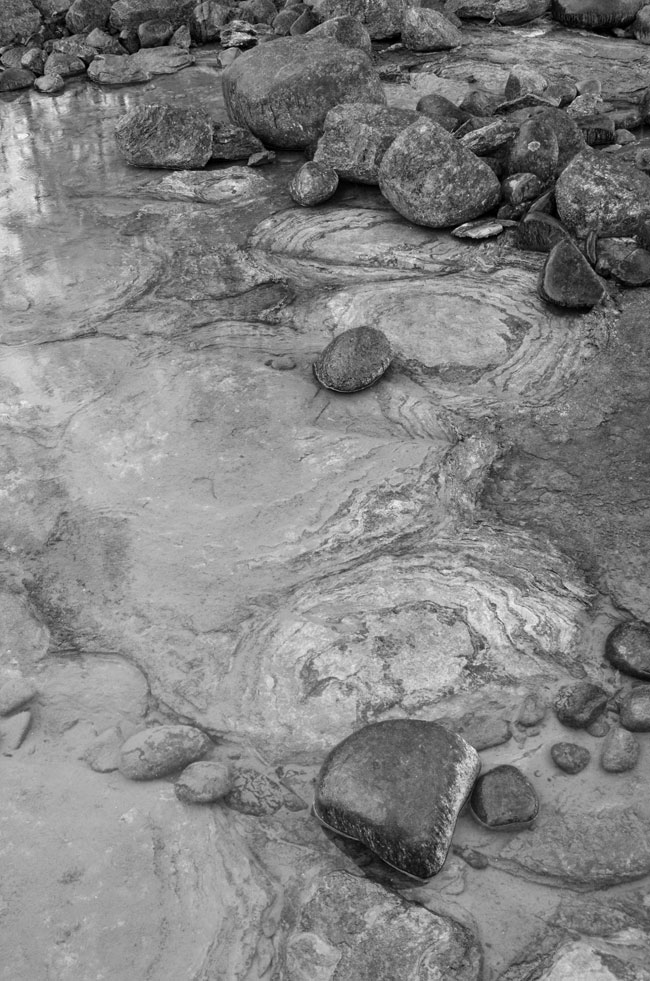
 These stromatolites are over 450 million years old and were formed during the Paleozoic period when this area was located near the equator and was covered in a warm shallow sea. The stromatolites are built up in layers by cyanobacteria, also known as blue-green algae, and are accretionary structures rather than body fossils.
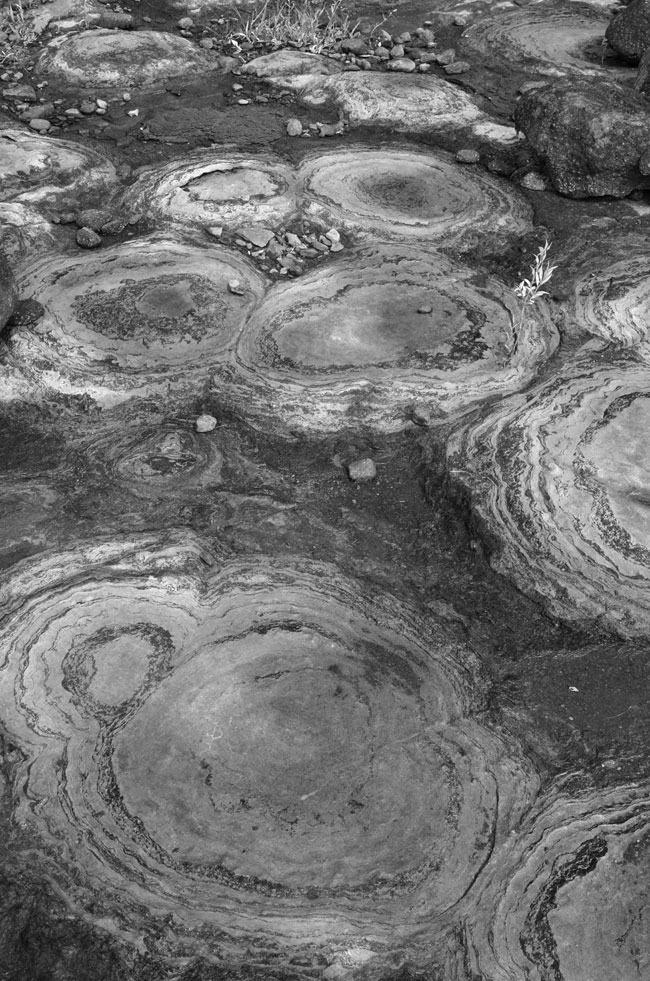

 This cross-section above, of a dislodged and abraded stromatolite shows the many thin biofilm layers that are built up by cyanobacteria (blue-green algae).
 Nearby fossil-rich rocks – which are slowly being eroded by the current – exposing various fossil snails.
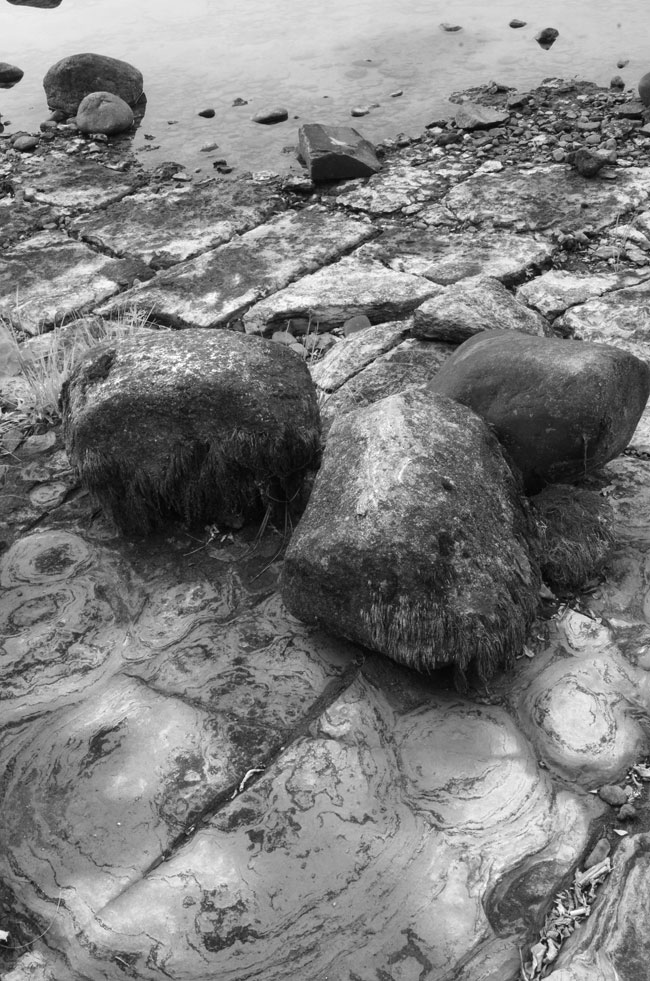


 The Champlain Bridge linking Ontario and Quebec; a striking contrast between the modern and the ancient world.

Related links and references:
Mapping the Shoreline 1
Ottawa River Keeper
Wikipedia:Pangaea
Wikipedia:Stromatolites
All images © Karen McRae, 2012
 draw and shoot