
The river holds a lot of history.
Some of it has flowed downstream with the currents and moved on to the sea but some of its oldest history is still here. And when the water is low you can find one of the most striking features visible along the Ottawa River shoreline: The stromatolites on the Quebec side of the river. They have been scraped down by glaciers and eroded by time but the ancient stromatolite bed remnants are still remarkably beautiful and visible.
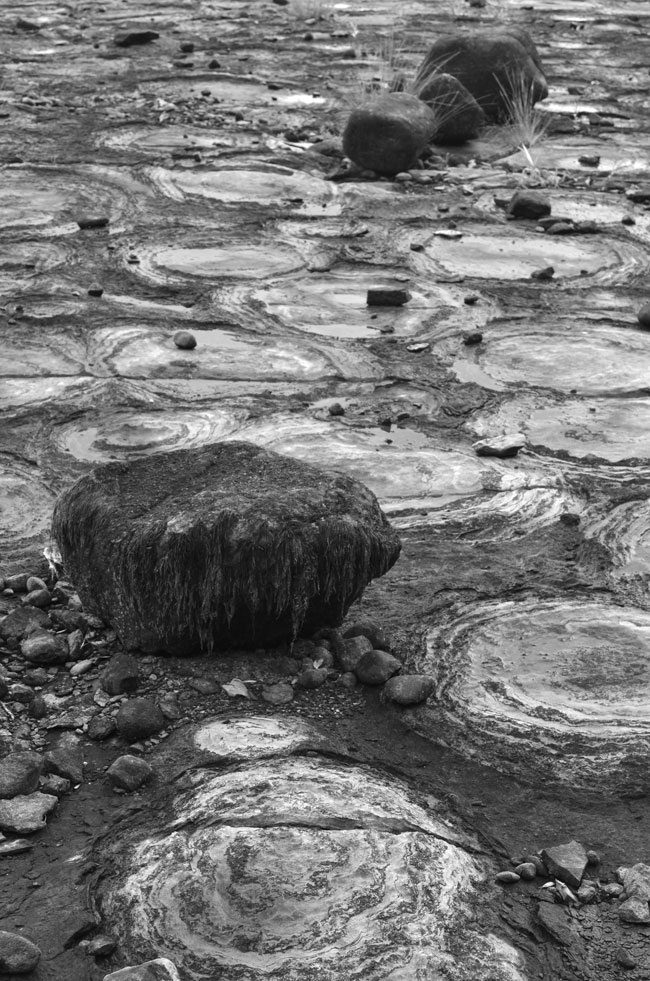 The seaweed growth on the rock above shows that the stromatolite formations are often covered by water.
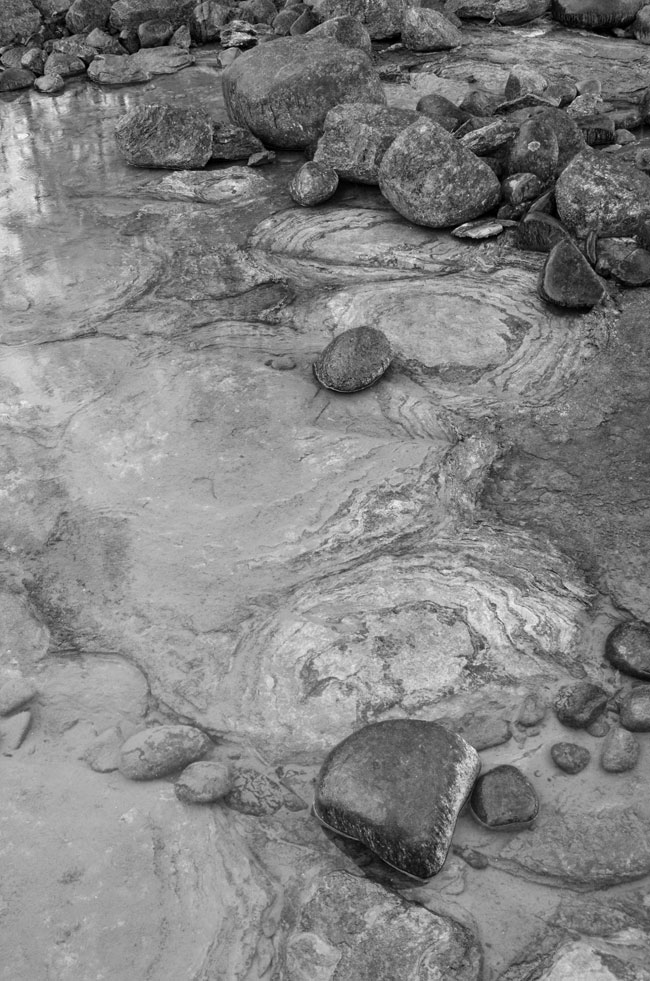
 These stromatolites are over 450 million years old and were formed during the Paleozoic period when this area was located near the equator and was covered in a warm shallow sea. The stromatolites are built up in layers by cyanobacteria, also known as blue-green algae, and are accretionary structures rather than body fossils.
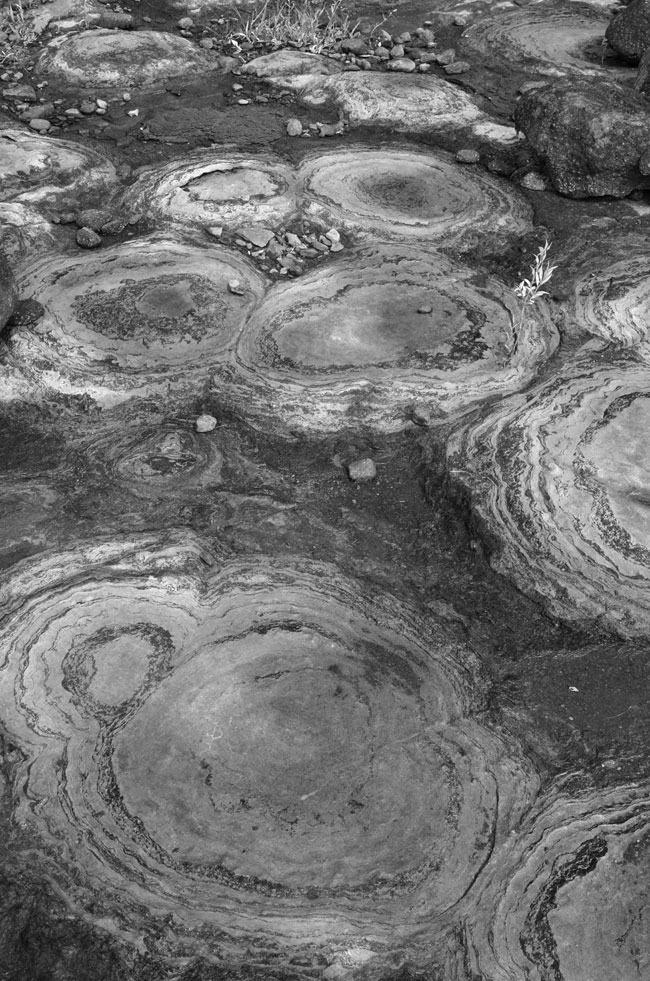

 This cross-section above, of a dislodged and abraded stromatolite shows the many thin biofilm layers that are built up by cyanobacteria (blue-green algae).
 Nearby fossil-rich rocks – which are slowly being eroded by the current – exposing various fossil snails.
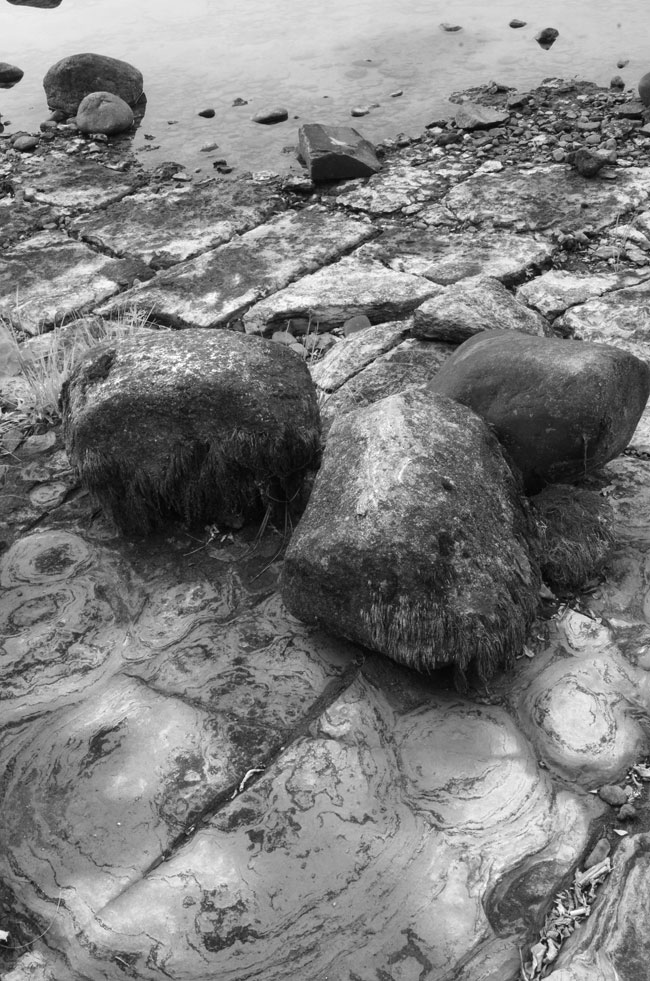


 The Champlain Bridge linking Ontario and Quebec; a striking contrast between the modern and the ancient world.

Related links and references:
Mapping the Shoreline 1
Ottawa River Keeper
Wikipedia:Pangaea
Wikipedia:Stromatolites
All images © Karen McRae, 2012
 draw and shoot