Fall, by the Wayside

RoadsideGrasses2

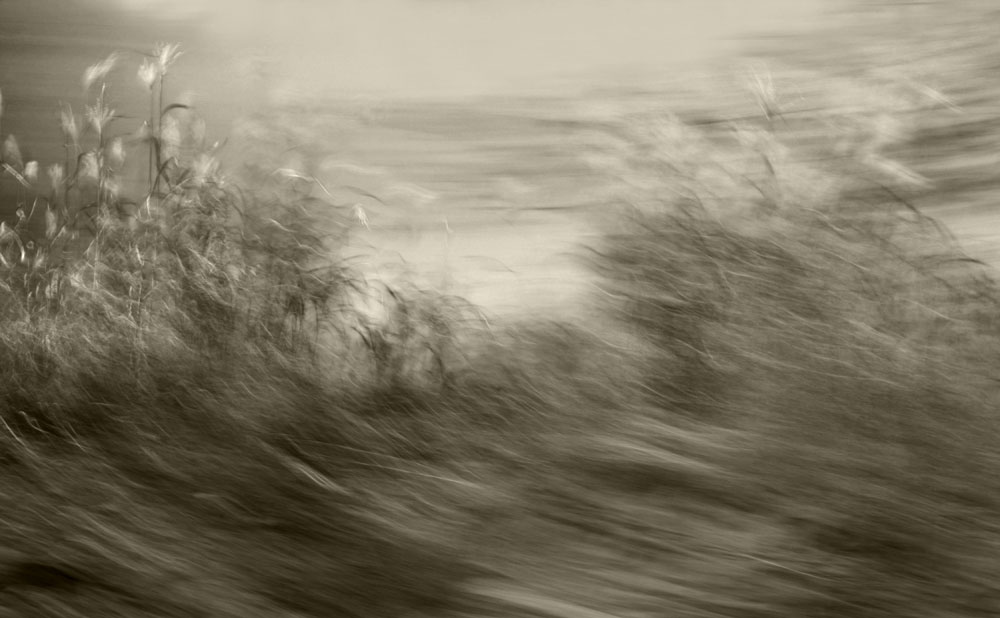
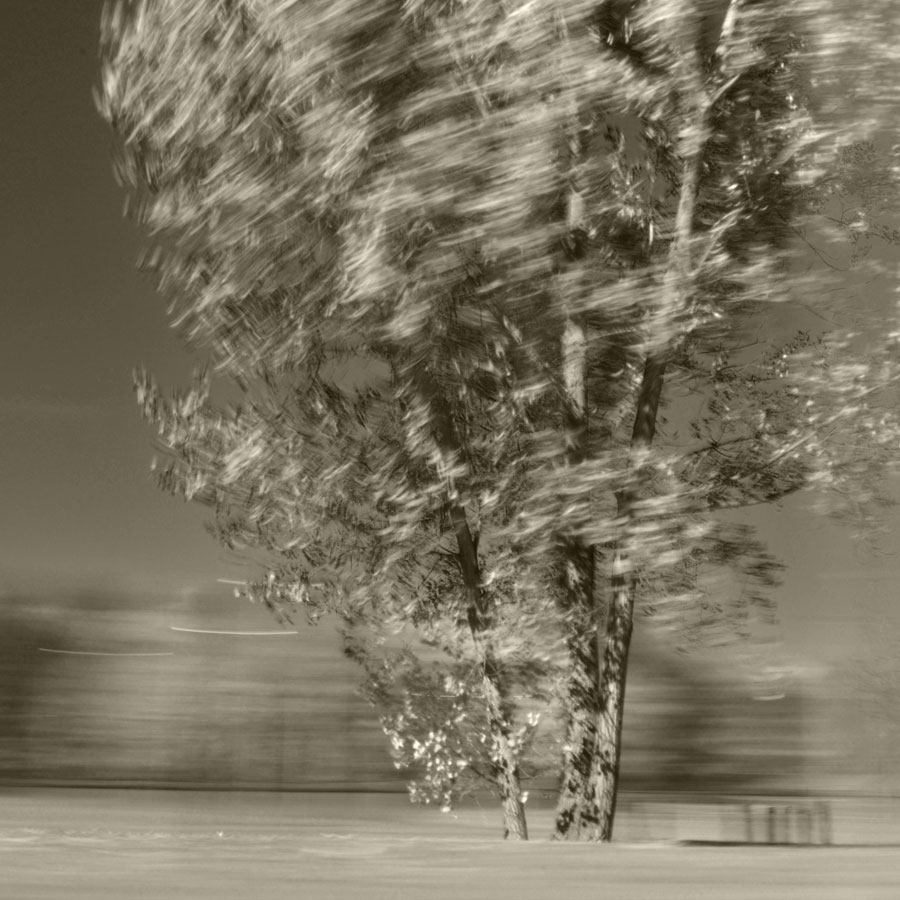
RoadsideTreeOr, autumn by the roadside.

Photographs made from a moving car (I wasn’t driving, obviously). I found the intense colour a bit bothersome in these particular compositions so I converted them to sepia and adjusted the levels of some of the tones to bring out contrast.

These are made using a slow shutter speed and by panning the camera (following the subject) as the car moves along. I like employing this technique as it can result in some unusual photographs with some parts of the frame relatively in focus and other parts quite blurred, sometimes resulting in what appears to be opposing movement.

I like, too, not knowing what to expect when I look at the image. It’s always a bit of a surprise, with many failures and a few frames having a bit of interest. Well, and it is an alternative for those times when you see potential photographs speeding past your window but you are just unable to stop.

© Karen McRae, 2013

Walking on Water: A Collaboration

OctoberRefelctions1The weather has been amazing here. A lingering of summer sun and warmth, but with cool nights and the start of crunching leaves underfoot. I had to go see what’s happening at the creek.

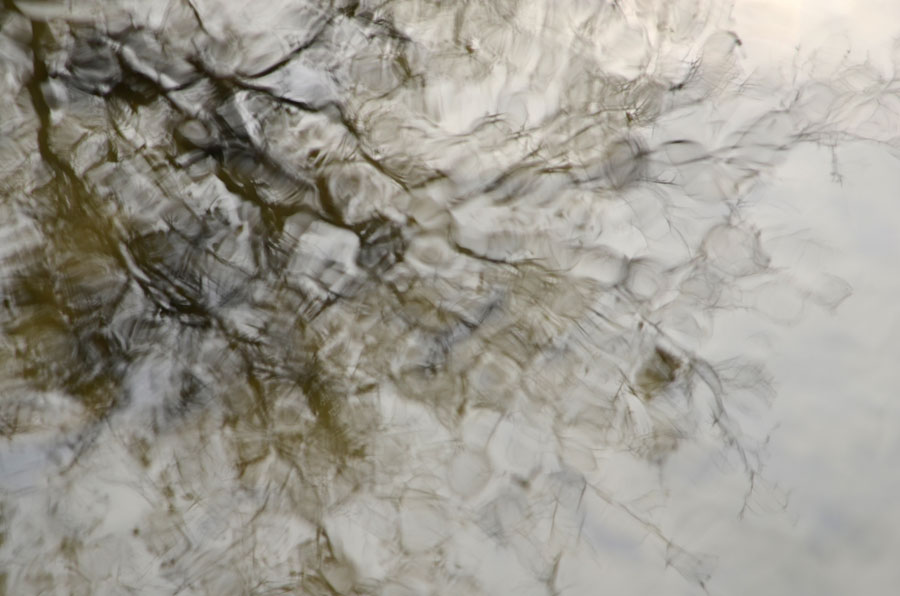
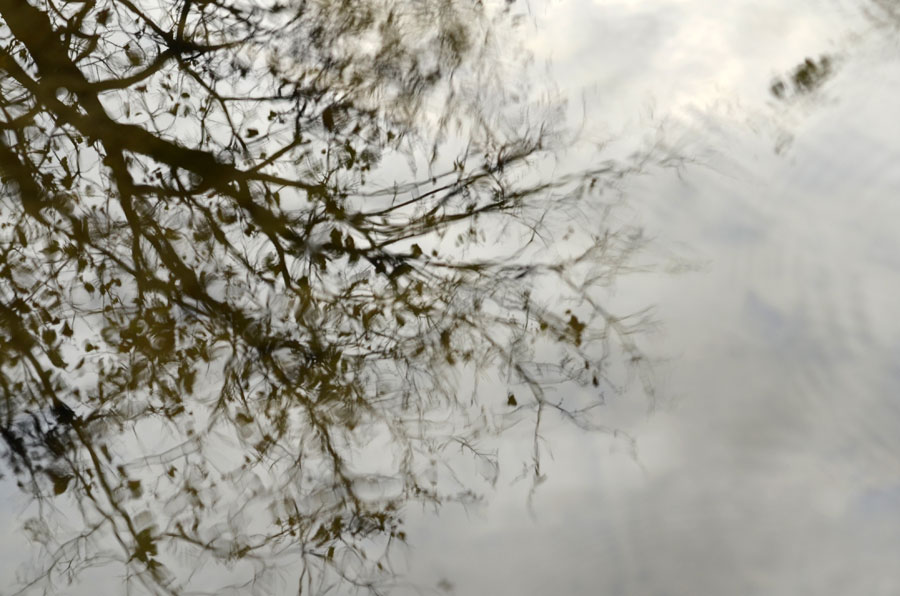
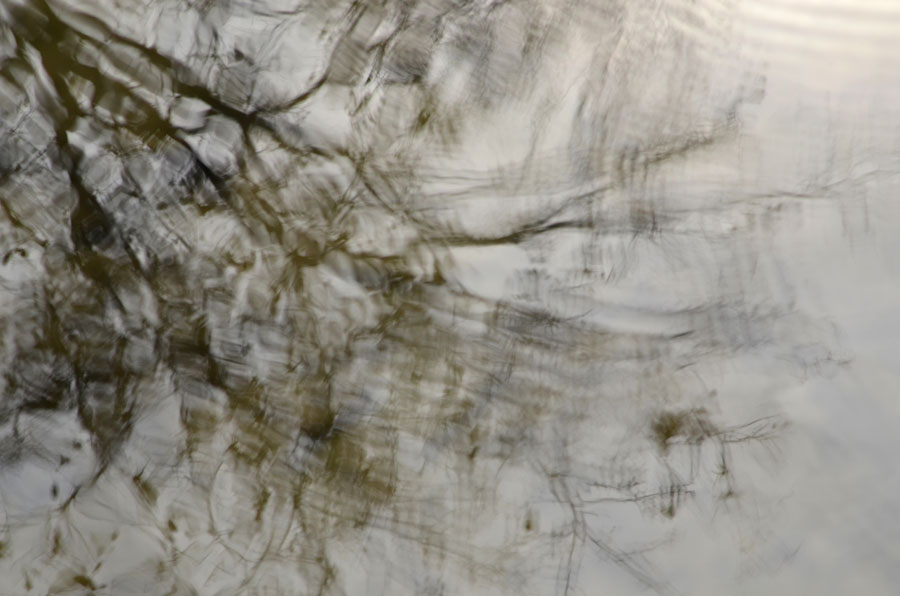
The most interesting things I find are the reflections. I have photographed them in every way, it seems. Still, there is always something new. The surface is a wavering mirror of the seasons. A reminder that everything is in constant flux. The shifts of light and cloud, the variable movements of the water in and out of small eddys, the colours and compositions from the graceful trees. And then there is the debris that lies under the surface and how the light reaches it. Every moment is different. There is something meditative, too, about watching the lazy movement of the creek – as you shift focus through the lens you might wonder if you are watching nature’s own lava lamp.

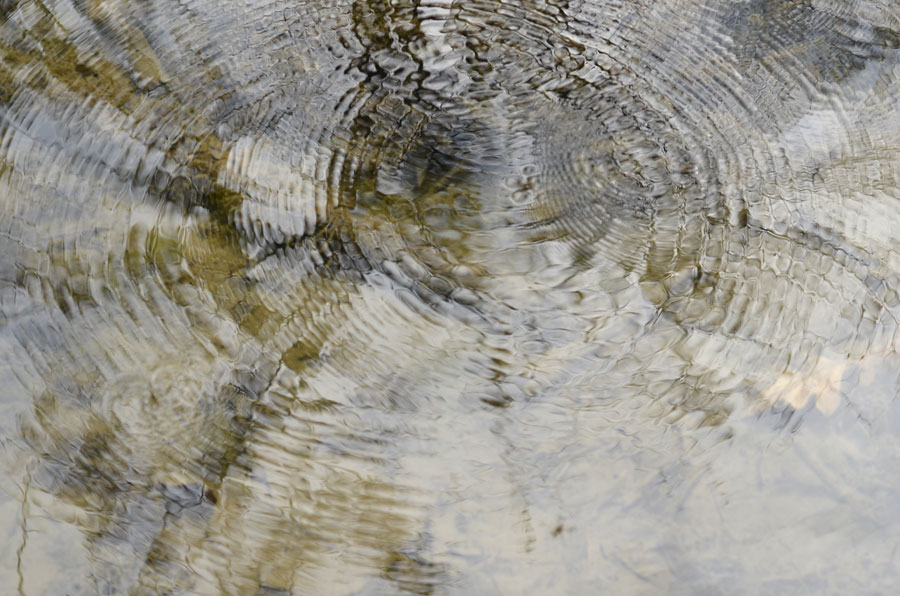
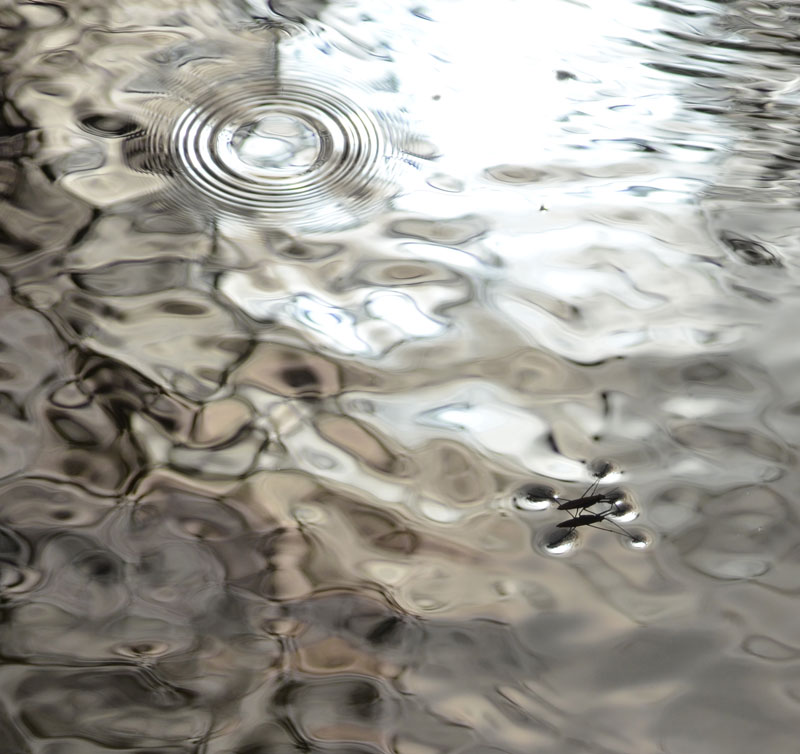
I came to a place where the tiny water walkers were continually drawing and redrawing the surface. They agreed to allow me to photograph their brief sketches as long as due credit was given. : )

This is the art of walking on water:
OctoberRefelctions8

OctoberRefelctions2

OctoberRefelctions5

OctoberRefelctions3

OctoberRefelctions13

OctoberRefelctions7

OctoberRefelctions4

OctoberRefelctions16

WaterStrider2I have to say it looked a bit like a game of bumper cars with the zippy water striders all continuously knocking into each other. A beautiful day to play.

OctoberRefelctions17

[These images are part of an ongoing series exploring surface reflections of water, moving and still: Surface, Submerge: Reflections in Water]

© Karen McRae, 2013

Autumn Butterflies

Autumn-Butterflies

The stemmed kind…

[It’s actually Virginia Creeper
growing on a fence,
trembling in the wind (long exposure),
and a second layer of the same thing with camera movement.
Anyway, it made me think of yellow butterflies.]


© Karen McRae, 2013

Another Monochromatic Gelatinous Post

( So, I’m having trouble coming up with titles … )

This is the third entry (perhaps the last, for now) in a series of sea jelly photographs I’m exploring in black and white. I started looking at their forms for some drawings and found them interesting presented in monochrome.

All of the sea jellies pictured here are Ctenophores (comb jellies). Ctenophores are classified differently from ‘true’ jellies because of their combs – rows of hair-like cilia that are used for swimming and also catching/consuming food (The actual cilia are not really observable in these photographs).

The images above are studies of just one comb jelly – perhaps Mnemiopsis leidyias or Bolinopsis infundibulum (they are difficult to tell apart). When this jelly was not moving it became rather formless-looking and alien-like, especially under these particular lighting circumstances. With different lighting (and in colour!) you may be able to see that this jelly is bio-luminescent.
 

_____

 
The second gallery of images  (with the exception of the last two) are a series of Pleurobrachia (Sea Gooseberries). You can see how they may have picked up the nickname of sea gooseberries.

The two tiny comb jellies at the end are Beroe Ctenophores. The beroe ctenophores have no tentacles and capture food through opening and closing their mouths.


[These photographs of Atlantic sea jellies were made in Cape Breton in the spring of 2012]

 
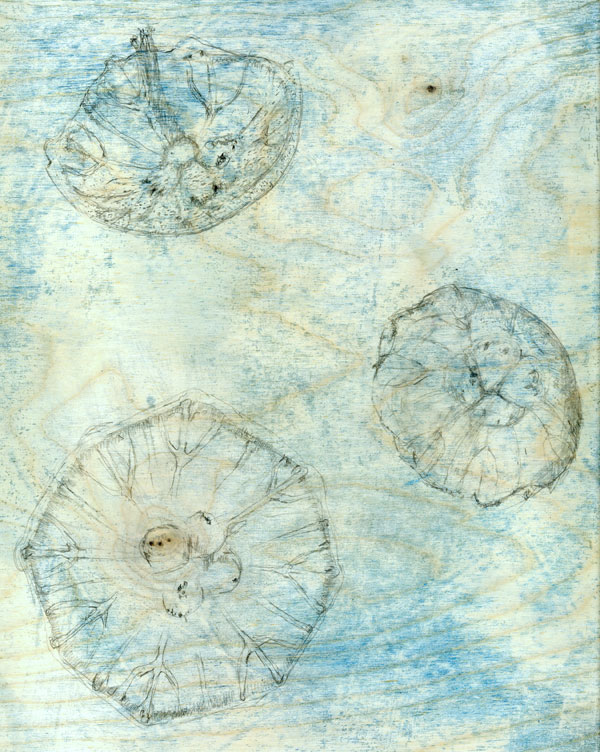
Moon-Jellies_UnderdrawingTo add a bit of colour – quick sketches of moon jellies on board (an ‘under-drawing’ before a layer of Mylar is applied).

© Karen McRae, 2013
More Sketches from the Sea

(Sketched by a camera.) The gallery of images above are a series of macro photographs of a small juvenile Moon jelly from the genus Aurelia. As I mentioned in the previous post I am revisiting some older sea jelly images and shifting them to black and white because I like how the details and forms are emphasized without the distraction of colour.
(Click on the images to enlarge)

The series of images below are possibly young and very small Pelagia noctiluca jellyfish (mauve stingers). You may notice a little amphipod ‘riding’ on one of them! Apparently many amphipods  have symbiotic or parasitic relationships with  gelatinous animals such as jellyfish. I’m not sure what’s going on here – perhaps public transportation – but if you take a look at this not very good video I have posted here you’ll get more of an idea.

[These photographs of Atlantic sea jellies were made in Cape Breton in the spring of 2012]

© Karen McRae, 2013

Whispers from the Sea: Aglantha


I have many photographs of tiny sea jellies that I’ve been meaning to post. Simple studies of their beautiful forms and details. I find converting them to black and white  emphasizes these details nicely and I like the way they almost look like drawings here. (Some of them are indeed working their way into drawings.)

This first set is Hydromedusae Aglantha. The jellyfish pictured here is only about 1cm long. If you look closely you will notice the tentacles are mostly contracted into tight spirals in these images. I have previously posted images in colour here, but for some really beautiful photographs of Aglantha (with extended tentacles) go to Alexander Semenov’s flicker page. And if you have a bit of time to get lost in the sea, visit his incredible website.

[These photographs were made in Cape Breton in the spring of 2012]

© Karen McRae, 2013