Mapping the Shoreline 2: Stromatolites

The river holds a lot of history.

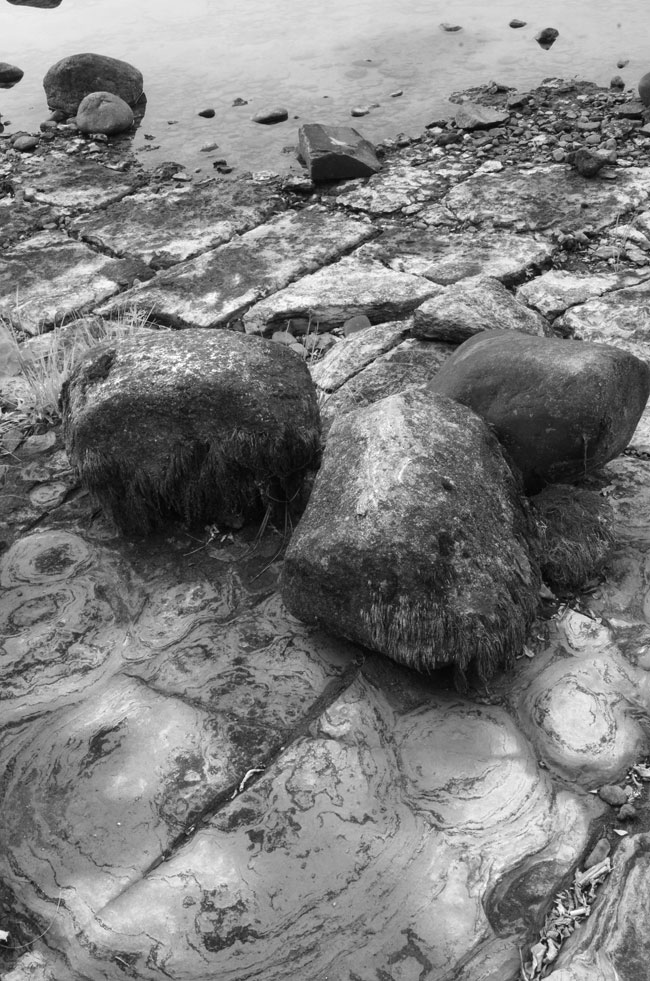
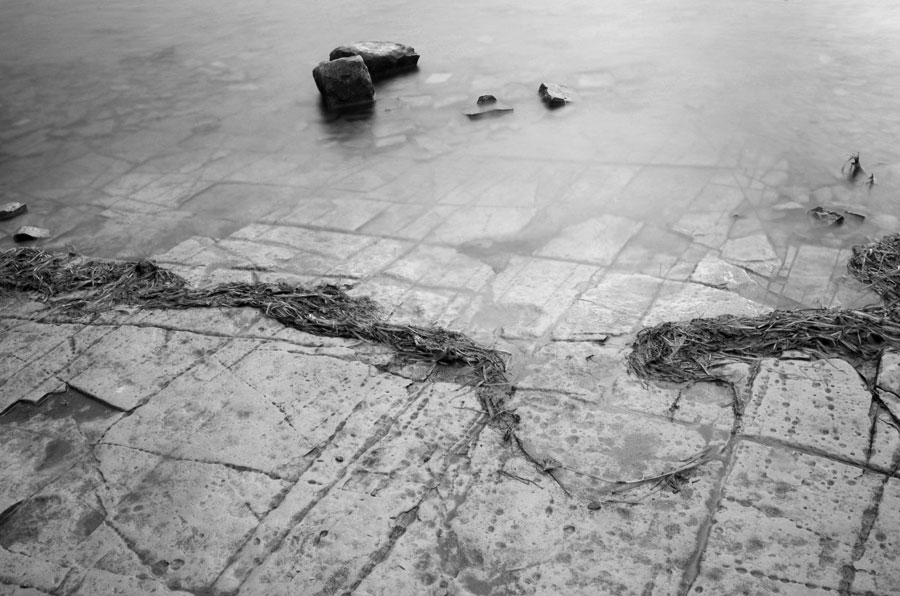
Some of it has flowed downstream with the currents and moved on to the sea but some of its oldest history is still here. And when the water is low you can find one of the most striking features visible along the Ottawa River shoreline: The stromatolites on the Quebec side of the river. They have been scraped down by glaciers and eroded by time but the ancient stromatolite bed remnants are still remarkably beautiful and visible.
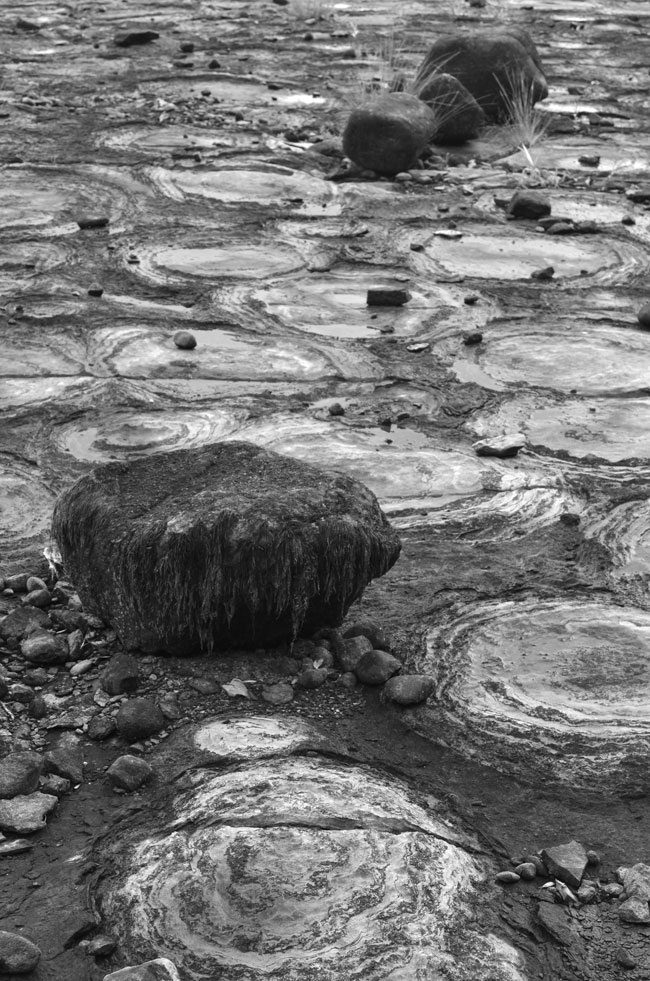
The seaweed growth on the rock above shows that the stromatolite formations are often covered by water.
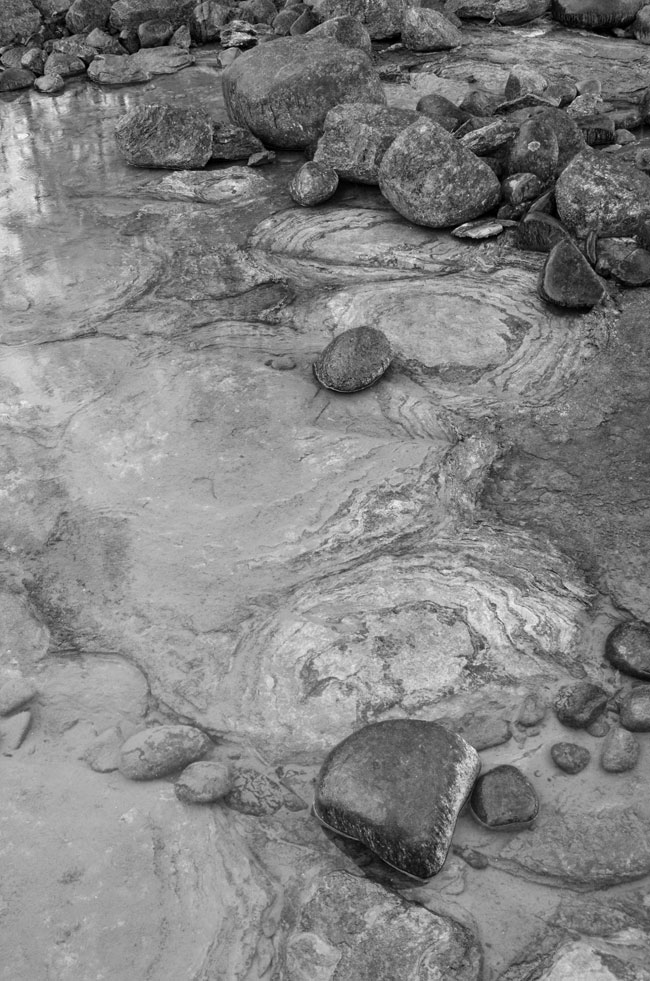

These stromatolites are over 450 million years old and were formed during the Paleozoic period when this area was located near the equator and was covered in a warm shallow sea. The stromatolites are built up in layers by cyanobacteria, also known as blue-green algae, and are accretionary structures rather than body fossils.
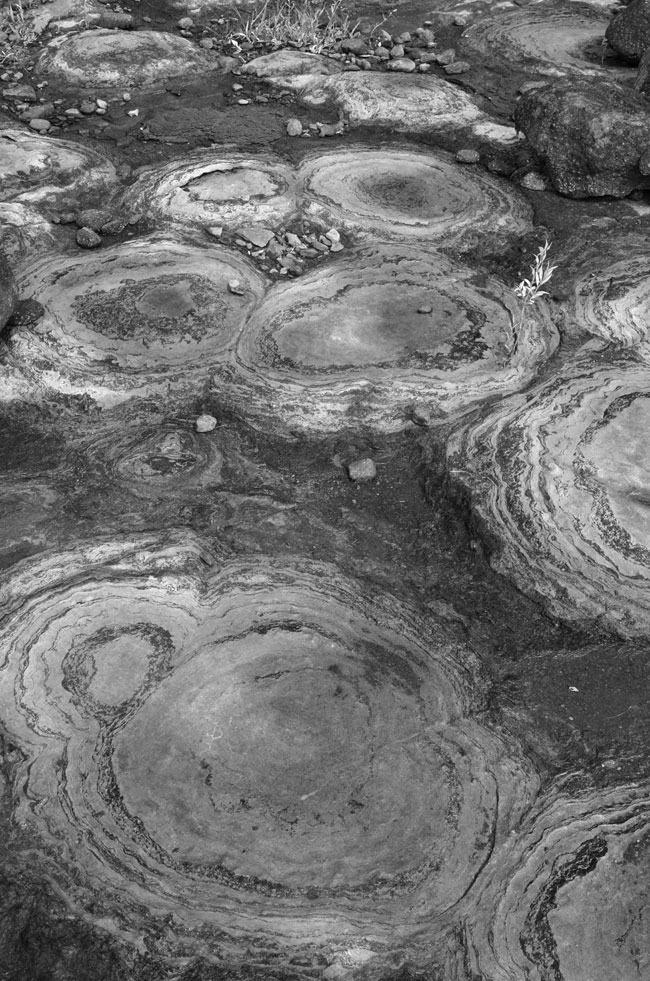


This cross-section above, of a dislodged and abraded stromatolite shows the many thin biofilm layers that are built up by cyanobacteria (blue-green algae).

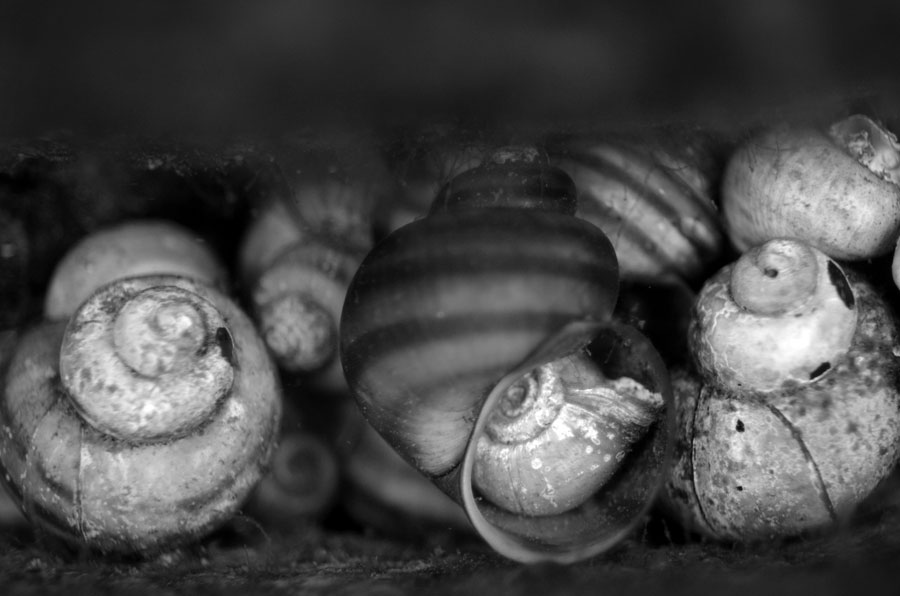
Nearby fossil-rich rocks – which are slowly being eroded by the current – exposing various fossil snails.


The Champlain Bridge linking Ontario and Quebec; a striking contrast between the modern and the ancient world.

Related links and references:

Mapping the Shoreline 1
Ottawa River Keeper
Wikipedia:Pangaea
Wikipedia:Stromatolites

All images © Karen McRae, 2012
Umbra & Umber

Perhaps an image that you wouldn’t normally expect here but I was struck by the light on the wall and how the values of the overlapping shadows create a sense of dimension in the arm. This is pure shadow and fleeting light (not a reflection of the figure) coming together for just a few moments. There are possibilities here in the shadows…
*Umbra is Latin for shadow.

Image © Karen McRae, 2012

Gesture

I love the sound of it, yes. But also what it infers. Gesture. My impression of this word itself, a movement in my mind.
If you look up the meaning, you might turn a page; a thin paper between your fingers and thumb. A whisper as the page rustles from your movement. A small intake of air as you recall the smell of this book that has been on a shelf close to you  for as long as you can remember. You might find that you have stretched this word; made it bigger, filled it with as much meaning as you could get into it. Or, maybe this small word really is that big.

The fleeting gentle moments are the ones that stick in my mind. There is a purity in these moments. The smallest of movements.  Communication. A demonstration of respect.  Intention. Or without intention even.

Perception.

A time-worn beauty in the curved, slouched back of the man waiting to cross the street. A slight shifting in anticipation. One shoulder leaning into a movement that hasn’t quite begun.

The weight in the feet of the crows as they lift off from the side of the road. Draping feet. Briefly left behind. Suspended.

Voices. Blended voices in harmony. Entering the body and filling you for a moment. From one body into another. Pitch perfect. Grace.

An arm held out. Outstretched, the palm open. Fingers slightly bent. Just barely touching a pane of glass.  Hovering. Just barely.

The wind sweeping across the fields. Flattening the grasses. Raising them up. The wind not making up its mind. Shifting the sands. Always shifting.

Fleeting poses. Your arm moving in its own quick gesture to find the lines. To find the light, the dark. A gesture to capture a gesture. Making marks.

These small things, I find they are not small. The people, the landscape they are in, these things are not small.

A single gesture can ripple through them.

© Karen McRae, 2012

Cladonia Seussimilis

I’m not exactly sure of the correct names for all of these lichens but I have dubbed them collectively Cladonia Seussimilis, for to my eye they appear rather Seussian in form. And I like the way it sounds.
I believe the beautifully tiered fountain-like ones, are actually called Ladder Lichen, Cladonia cervicornis.
I’m a bit smitten with them…


Above: Possibly split-peg lichen, Cladonia cariosa


All images © Karen McRae, 2012
Pixie Cup Lichen

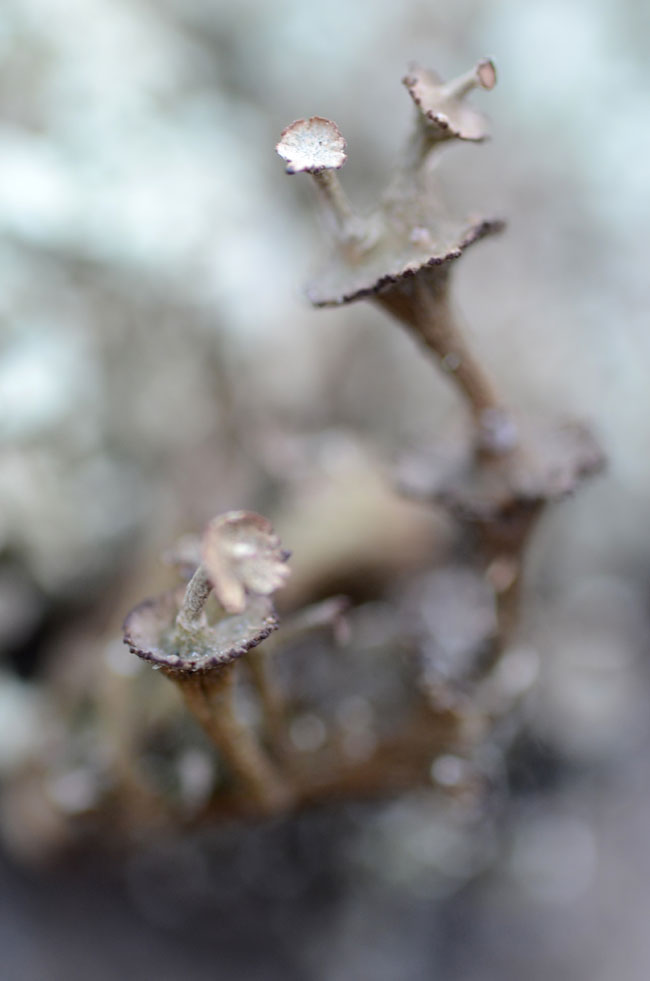
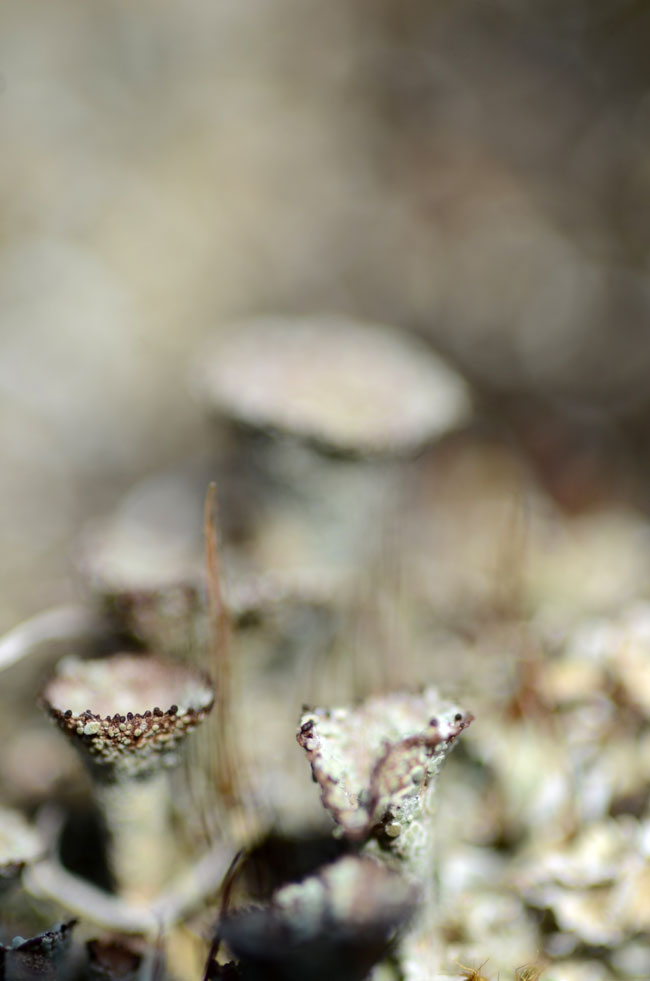
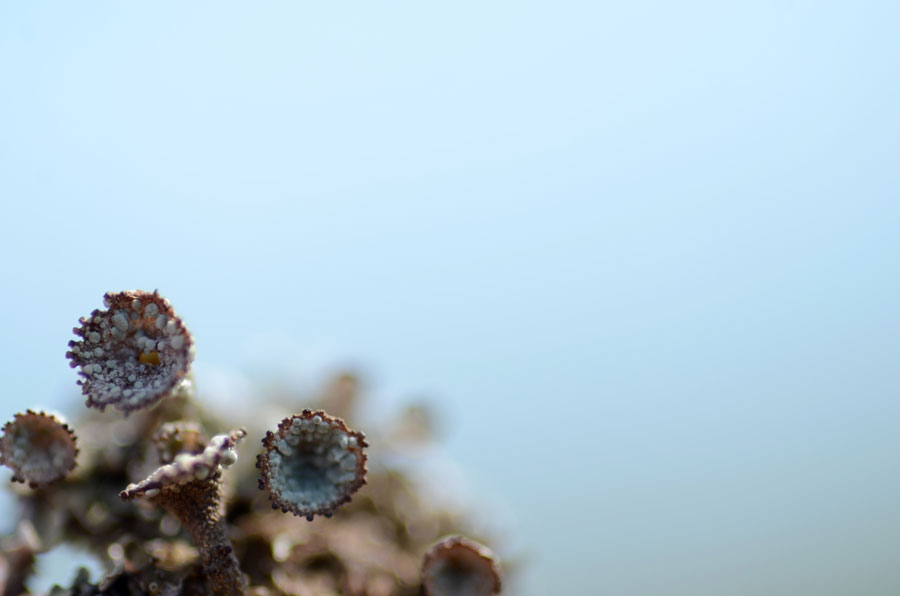
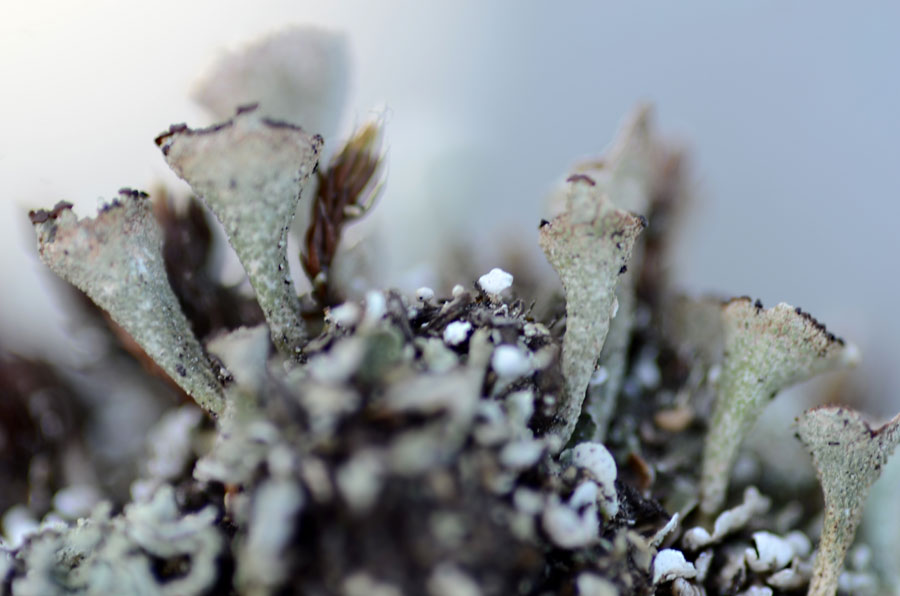
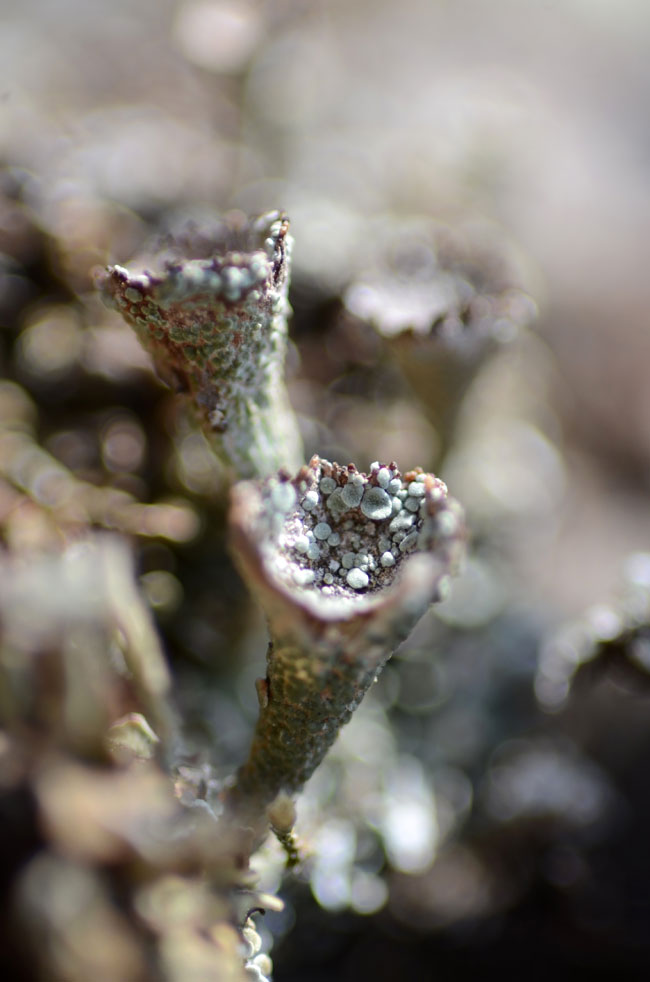
Lichens have always fascinated me, but it’s the little cup lichens that I find exceptionally intriguing. I think these ones may be Cladonia pyxidata, a pixie cup Lichen. They make for an exquisite miniature landscape, and although I didn’t see any myself, it’s not hard to imagine that a Pixie might indeed inhabit this sort of magical place. These pixie cups are growing in small beds of moss and earth tucked into a craggy rock .

I was struck by how they look so remarkably like an underwater landscape of corals and sea anemones and the sense of this is enhanced with a very shallow depth of field. Perhaps too shallow. But I am not finished looking at this tiny world.


All images © Karen McRae, 2012